
The short answer
Accurate window quotes start with you: decide what you want (window type, material, glass package, installation method) before anyone visits, then get at least three in-home quotes specifying identical products. A good quote lists every window by size and location, the exact brand and model, glass specs, installation method, and line-item pricing — not a single lump sum. Quotes built this way are comparable, negotiable, and far less likely to balloon later.
Why most window quotes are useless
Here’s the uncomfortable truth about this industry: a large share of window quotes aren’t really quotes at all. They’re opening offers in a negotiation, built on vague product descriptions and lump-sum pricing that hides what’s actually included. Two contractors can bid the “same” ten windows and differ by $4,000 — not because one is dishonest, but because they’re quoting different products, different installation methods, and different scopes of trim and finish work.
The fix isn’t finding a more honest contractor (though that helps). The fix is making your quotes comparable by construction. When every bidder prices the same defined scope, the numbers mean something — and the outliers reveal themselves immediately. This tutorial walks you through exactly how to do that.
Step 1: Define your project before anyone visits
Contractors can’t quote accurately what you haven’t defined. Before calling anyone, write down:
- How many windows, and roughly which rooms. Walk the house and count — most homeowners are surprised by the number.
- Window styles you want (double-hung, casement, slider, picture). Keeping the same styles as existing is cheapest; changing styles can mean reframing.
- Frame material preference — vinyl, fiberglass, wood, or composite. If you’re undecided, say so, but ask each bidder to quote the same material so bids stay comparable.
- Glass package minimums — at least double-pane with low-E coating and argon fill for most climates. If you’re in a cold zone, decide whether you want triple-pane quotes too.
- Installation method — insert (retrofit) or full-frame. If you don’t know which your house needs, ask each contractor to assess and quote both where applicable. Our guide to window installation labor costs explains what each method involves and why the price differs.
This one page of homework transforms the entire process. Instead of three salespeople each steering you toward their preferred product, you get three bids on your project.
Step 2: Find three (or more) contractors the right way
Three quotes is the minimum — four or five is better for big projects. But which three matters enormously:
- Mix company types. Get at least one bid from a local independent installer, one from a regional window company, and one from a manufacturer-authorized dealer. They price differently and you’ll learn something from each visit.
- Check licenses and insurance first, not after. Your state’s contractor licensing board website takes two minutes. No license, no quote — this single filter eliminates most of the industry’s bad actors.
- Read recent reviews with skepticism. Look for patterns across dozens of reviews, not individual five-star raves. Pay special attention to how the company handles complaints — that’s the real review.
- Avoid lead-generation middlemen who sell your contact info to five companies at once. Contact installers directly; you’ll get better pricing without the referral fee baked in.
Step 3: Run the in-home visit like an interview
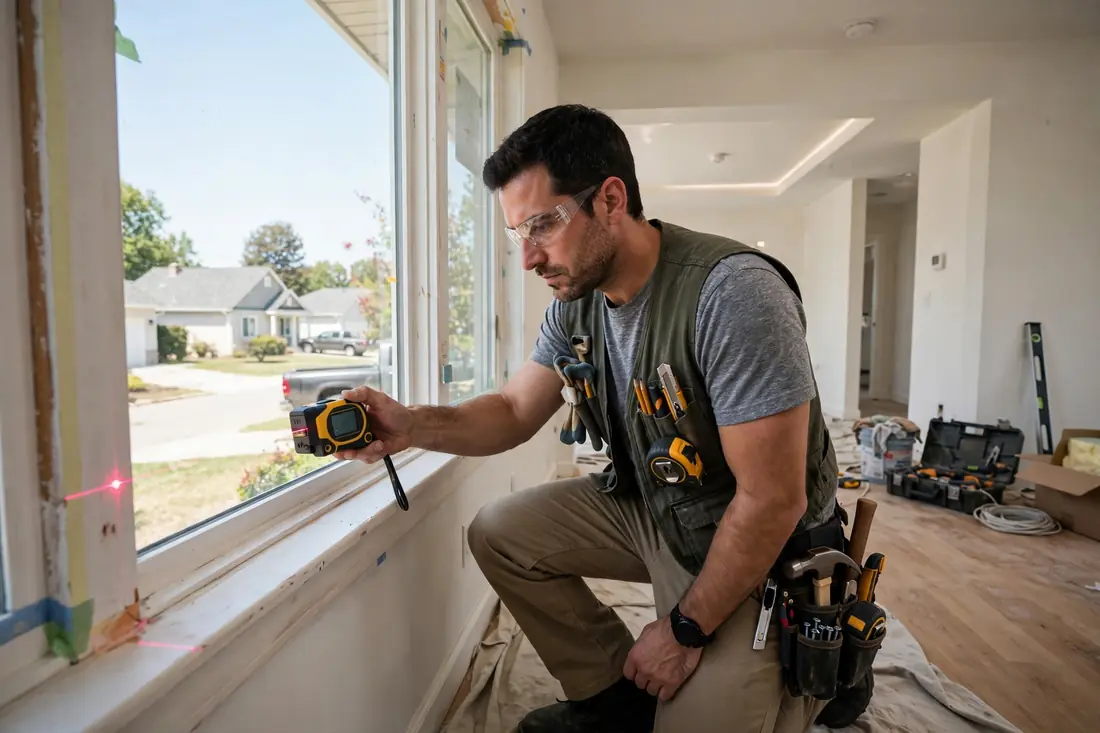
The in-home consultation is where accuracy is won or lost. A thorough contractor measures every opening, inspects the existing frames for rot, checks for lead paint in pre-1978 homes, and asks about your goals. A rushed one glances around for ten minutes and hands you a number. Guess which quote you can trust.
During each visit:
- Hand them your project definition from Step 1. Ask them to quote exactly that scope.
- Ask what they found. Rotten sills, out-of-square openings, and asbestos siding change the price — a good contractor tells you now, not on installation day.
- Ask about the installation crew. Employees or subcontractors? How long have they been with the company? The crew matters as much as the window.
- Take notes on what each one emphasizes. If one bidder is the only one who mentions flashing details or insulation type, that’s data.
- Never sign anything at the table. Legitimate contractors expect you to compare bids. Anyone demanding a same-day signature is waving the biggest red flag in window replacement — walk away no matter how good the “today only” price sounds.

Step 4: Demand a line-item quote, not a lump sum
This is the step that separates accurate quotes from fiction. A proper window replacement quote should break down, at minimum:
- Each window by location, size, style, and operation (“Master bedroom, 36×54, double-hung, vinyl”)
- Brand, model line, and glass package with U-factor and SHGC ratings — not just “premium vinyl windows”
- Installation method per window or for the project (insert vs. full-frame)
- Labor as its own line, separate from materials
- Trim and finish work — interior trim, exterior capping/wrap, caulking, and paint/touch-up: included or not?
- Disposal of old windows and jobsite cleanup
- Permits, if your municipality requires them — and who pulls them
- Warranty terms — manufacturer (frame, glass seal, hardware) and installer workmanship, each with durations
- Payment schedule — deposits, progress payments, final payment on completion
- Timeline — measurement to manufacturing to installation dates
If a bid says “$12,500 for 10 windows” with no breakdown, you don’t have a quote — you have a number. Ask for the breakdown in writing. A contractor who can’t or won’t itemize is either disorganized or hiding margin. Neither is who you want in your walls.
Step 5: Compare bids line by line
With itemized quotes in hand, build a simple comparison. You’re looking for three things:
Are they quoting the same thing?
Check brand tier, glass package, and installation method first. A $9,000 bid for insert vinyl versus a $13,000 bid for full-frame fiberglass aren’t competing — they’re different projects. Normalize the scope before comparing prices, or ask the outlier to re-quote your defined scope.
Where exactly do they differ?
Line items make this visible. Maybe Bidder A includes exterior aluminum capping and Bidder B plans to reuse your old trim. Maybe one includes a 10-year workmanship warranty and another offers one year. Price differences usually have explanations — the line items tell you whether the explanation justifies the gap.
What’s missing?
The cheapest bid often wins by omission: no permit fees, no disposal, no trim work, vague warranty. Add the missing pieces back in mentally (or ask for a revised quote) before declaring a winner. Based on national cost guides as of 2026, a typical 10-window vinyl project runs roughly $5,000 to $14,000 installed — if your bids fall far outside that band in either direction, something in the scope needs a second look.
Step 6: Check references and credentials before you negotiate
Narrow to your top two bidders, then verify:
- Call two or three recent references — not the company’s hand-picked showcase jobs from five years ago. Ask: did they show up on schedule? How was the cleanup? Any callbacks needed?
- Confirm license and insurance are current — general liability and workers’ comp. Ask for certificates; legitimate contractors provide them routinely.
- Search the company name plus “complaint” and “lawsuit.” A pattern of disputes over deposits or unfinished work is disqualifying.
- Verify the manufacturer relationship if they claim authorized-dealer status — it affects your warranty.
Step 7: Negotiate and sign smart
Window pricing has margin built in — the first number is rarely the last. Effective, honest negotiation:
- Use competing bids as leverage, not weapons. “Your bid is $2,000 over the next comparable one — can you walk me through the difference?” works better than ultimatums and often surfaces legitimate scope differences.
- Negotiate scope before price. Asking “what if we do insert instead of full-frame on the upstairs windows?” can save more than haggling, with no hard feelings.
- Get the final price in writing with the full line-item scope attached. Verbal promises about trim, cleanup, or timelines are worth nothing.
- Structure payments safely: a modest deposit (10 to 25 percent is typical; be wary of anyone demanding half or more upfront), a payment on delivery of materials, and the balance on satisfactory completion. Never pay in full before the work is done.
- Read the contract’s fine print — cancellation terms, change-order pricing, and what happens if hidden rot is found. Our 12 questions to ask before you sign doubles as a contract checklist.
Mistakes that ruin quote accuracy
- Getting phone-only quotes. No contractor can price your openings, frame condition, or access challenges sight unseen. Phone quotes are guesses; insist on in-home measurement.
- Comparing different products. The number one reason quotes “don’t make sense.” Lock the product spec first, then compare.
- Ignoring the installation method. Full-frame installation can add 40 to 100 percent over insert pricing. If one bid assumes full-frame and another assumes insert, you’re comparing different jobs.
- Chasing the lowest bid blindly. The cheapest quote is sometimes the best value — but only when the scope matches. More often it’s missing trim work, warranty, or proper flashing.
- Skipping the reference check. Fifteen minutes of calls can save you from the contractor with great prices and terrible follow-through.
- Signing under pressure. “This price expires tonight” is a sales tactic, not a supply-chain reality. Real quotes are typically honored for 30 days — ask for that in writing.
Quick answers
How many quotes should I get?
At least three, from different types of companies (independent installer, regional company, manufacturer dealer). For projects over about $15,000, four or five bids are worth the extra effort — the spread between high and low bids grows with project size.
Should I tell contractors what the others bid?
Sharing the general range (“I’m seeing $9,000 to $12,000 for this scope”) is fine and often productive. Sharing the exact line-item breakdown of a competitor’s bid is poor form and can backfire — keep it directional.
How long should a quote be valid?
Thirty days is the industry norm for a detailed written quote. Material prices do move, so a contractor won’t honor a price forever — but anyone who can’t hold a number for a month is telling you something about their operation.
Are free quotes really free?
In-home estimates are free from most reputable window companies — it’s their cost of acquiring business. Be cautious of anyone charging for a basic estimate; it’s unusual in this industry and often a filtering tactic for high-pressure sales operations.
What if all my quotes are wildly different?
Then the scope isn’t actually defined. Go back to Step 1: write down the exact product, glass, and installation method, hand the same sheet to each bidder, and ask for revised quotes. The spread should collapse dramatically.
Your next step
Start tonight: walk your house, count the windows, and write your one-page project definition — styles, material preference, glass minimums, and which installation method you think applies. Then call three contractors this week: one local independent, one regional company, one manufacturer dealer. When the bids come back, compare them line by line using the checklist in Step 5, verify your top two with reference calls, and only then negotiate. The whole process takes about two to three weeks — and it’s the highest-return homework in home improvement.
1 thought on “How to Get Accurate Window Replacement Quotes”