The short answer
Full-frame window installation typically costs 15–30% more than a retrofit (insert) installation — roughly $700–$1,300 installed per window versus $450–$900 for a mid-grade vinyl retrofit, based on national cost guides as of 2026. Retrofit is faster and cheaper but only works when your existing frames are sound. Full-frame costs more because the crew removes everything down to the rough opening, inspects for damage, and rebuilds the flashing and trim. Get 3+ local quotes specifying the method.
What each method actually is
Forget the jargon for a moment and picture what happens at your house.
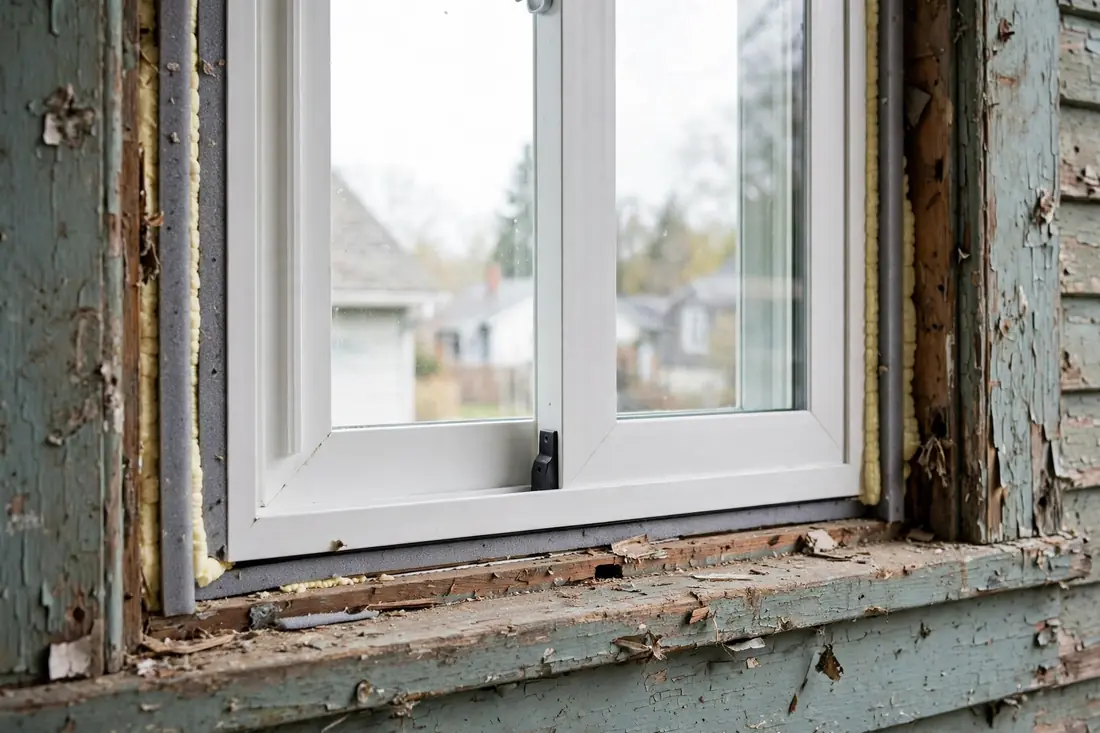
Retrofit (insert) installation: The crew removes your old sashes and glass but leaves the existing frame, sill, and trim exactly where they are. A new, slightly smaller window unit slides into that old frame like a box into a slightly larger box. They insulate around it, caulk it, cap the exterior, and add interior trim to cover the seam. The wall itself is never opened. Typical time: 30–60 minutes per window.
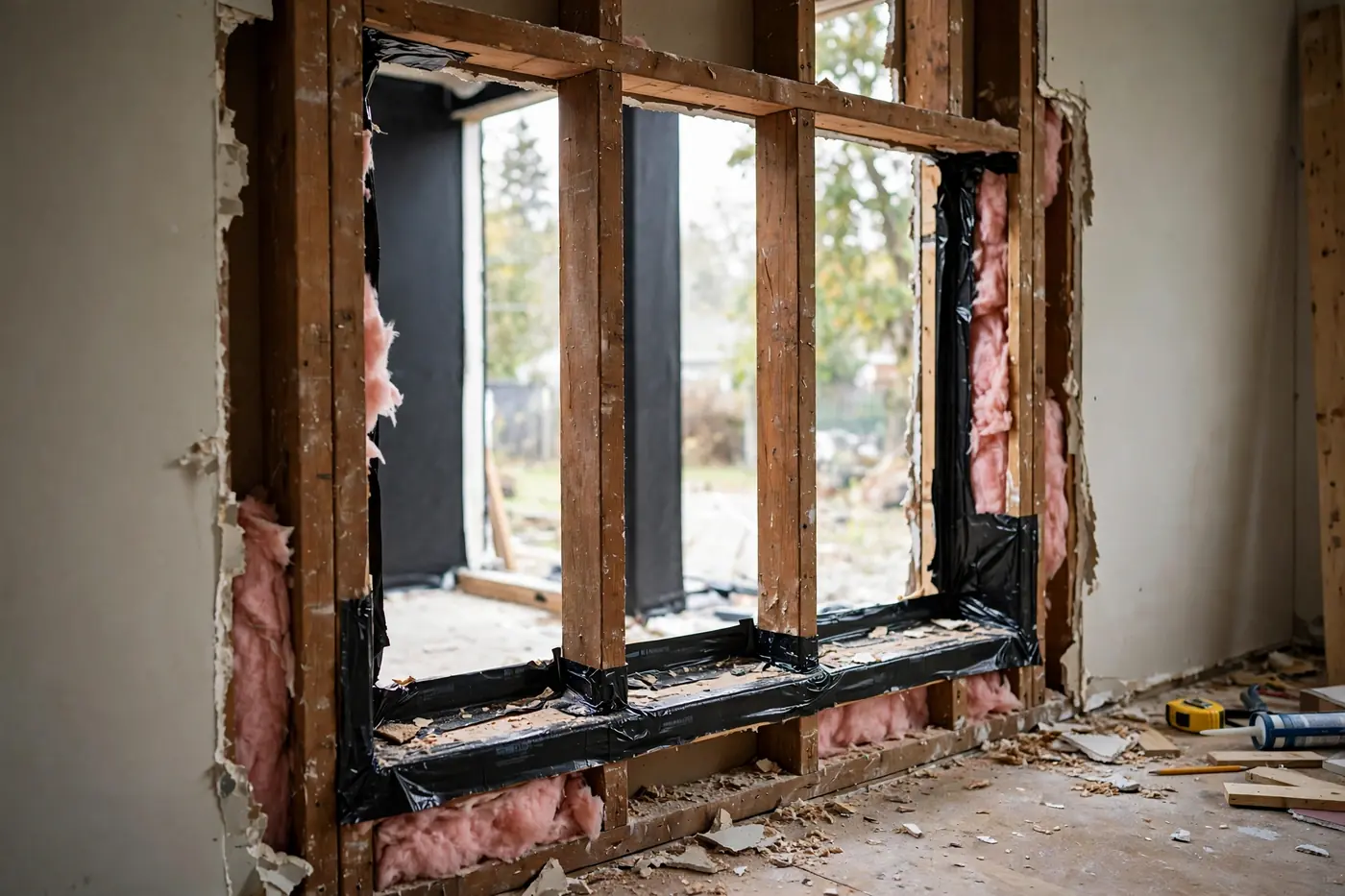
Full-frame installation: Everything comes out — sashes, frame, interior casing, exterior trim — all the way back to the rough opening in your wall framing. The crew inspects the exposed sheathing and sill, repairs any rot or damage, installs new flashing and a sill pan, sets the new window, then rebuilds all the interior and exterior trim. Typical time: two to three hours per window.
One way to think about it: retrofit is getting new teeth fitted to your existing jaw. Full-frame is jaw surgery. Both can be exactly right; they solve different problems.
The cost difference, with real numbers
Using mid-grade vinyl windows as the baseline (the most common replacement scenario):
| Retrofit / Insert | Full-Frame | |
|---|---|---|
| Typical installed cost per window | $450–$900 | $700–$1,300 |
| Labor premium | Baseline | ~25–40% more labor |
| Time per window | 30–60 minutes | 2–3 hours |
| Whole-house (12 windows) timeline | 1 day | 2–3 days |
| Glass area | Loses 1–2 inches per side | Keeps or gains opening size |
| Rot inspection | Not possible | Full inspection & repair |
| Exterior disruption | None | Trim removed, siding sometimes cut |
The 15–30% figure you will see quoted everywhere is the installed project difference for comparable windows. The labor portion alone jumps more — often 25–40% — because full-frame is fundamentally more hours of skilled work plus materials (flashing, trim, casing) that retrofit does not need. Our labor cost explainer breaks down exactly what those extra hours pay for.
The decision framework: five questions
Stop asking “which is better” and ask these instead. Your answers will point at the method.
1. What condition are your existing frames in? Press a screwdriver gently into the sill and lower jambs. If the wood is soft, crumbly, or discolored — or if you see staining that suggests water has been getting in — retrofit is off the table. Putting a new window into a rotting frame is like putting new tires on a rusted axle. This is the single most important question, and it decides the matter more often than price does.
2. Do you want more glass? Retrofit nests the new window inside the old frame, so you lose an inch or two of glass on every side. On a big picture window you will never notice. On a small bathroom window, the difference is visible. Full-frame restores the full original opening — and if your old windows were undersized for their openings (common with 1990s aluminum units), full-frame can actually gain you glass.
3. Are you changing size, style, or configuration? Want that double-hung to become a casement? Want to widen the opening? Combine two windows into one? Only full-frame can do it. Retrofit must fit the existing frame, which means the same size and roughly the same style.
4. What is your budget reality? On a twelve-window house, the method difference can be $3,000–$5,000. If your frames are sound and the budget is tight, retrofit delivers the vast majority of the energy and comfort benefit for meaningfully less money. Do not let a contractor upsell you to full-frame on healthy frames.
5. How long will you own this home? For a forever home, full-frame’s deeper energy performance and the chance to fix hidden damage have decades to pay off. For a house you will sell in five years, retrofit’s economics are usually unbeatable — buyers see new windows either way.
When retrofit is the wrong call
The most expensive window project is the one you pay for twice. Retrofit over damaged frames is the classic version: the new window looks great for two or three years while moisture keeps working behind it, and then the frame fails and you are paying for full-frame anyway — plus the cost of removing a nearly new window.
Watch for these warning signs that retrofit will cost you more in the long run:
- Visible rot, soft wood, or dark water staining on sills or jambs
- Chronic condensation between the frame and the wall (not on the glass)
- Frames that are out of square by more than about a quarter inch — the insert will never seal properly
- Previous water intrusion issues around the windows, even if “fixed”
- Vinyl original frames, which generally do not carry an insert well
A trustworthy contractor will probe a few sills during the estimate and tell you honestly which openings qualify for retrofit. A contractor who quotes retrofit for every opening without checking a single frame is quoting the easy sale, not the right job.
When full-frame is overkill
Full-frame is not “the premium option” in the sense of being universally better. It is the invasive option, and invasiveness has costs beyond money: more days of disruption, exterior trim and sometimes siding disturbed, more dust, more chances for something to go cosmetically wrong.
If your frames are solid, your openings are standard sizes, and you are happy with the current styles, full-frame buys you very little that retrofit does not deliver. The energy difference between a well-installed retrofit and a full-frame with the same glass package is real but modest — the glass and the air sealing matter far more than the method. Spend the savings on better glass instead.

What each method means for your timeline
Method choice ripples through your schedule. A twelve-window retrofit is typically a single day — the crew arrives in the morning and is gone by late afternoon. The same twelve windows full-frame is usually two to three days, with your house more of a construction zone throughout.
Then there is the hidden timeline: full-frame sometimes uncovers damage that needs repair, which can add days while materials are sourced. Retrofit rarely surprises you. Neither method changes the manufacturing lead time (typically 2–8 weeks from measurement to delivery), which dominates the total project calendar far more than install days. Our window replacement timeline walkthrough maps the whole process from first call to final walkthrough.
Three project scenarios, priced out
Abstract percentages are hard to budget around, so here are three typical projects with the method difference applied:
- Eight-window ranch, sound frames, all retrofit: roughly $4,800–$7,200 installed. Full-frame on the same house: $6,400–$9,600. The $1,600–$2,400 gap buys one day instead of two and zero exterior disruption.
- Twelve-window colonial, four openings with rot: eight retrofit ($3,600–$7,200) plus four full-frame ($2,800–$5,200) for a mixed total around $6,400–$12,400. This is the most common real-world outcome — rarely is a whole house purely one method.
- Ten-window 1920s home, all full-frame with rot repair: roughly $9,000–$15,000+, with repair costs on top where damage is found. The most expensive scenario, and also the one where skipping full-frame would have been the truly expensive choice.
Ranges are wide because region, product tier, and crew rates vary enormously — based on national cost guides as of 2026, treat these as budgeting brackets and get 3+ local quotes for your actual number.
Key takeaways
- Full-frame costs roughly 15–30% more installed than retrofit ($700–$1,300 vs. $450–$900 per window for mid-grade vinyl).
- Frame condition decides the method more than budget should — retrofit over rot is money wasted.
- Retrofit is faster (30–60 min/window), less disruptive, and the right call for sound frames and tight budgets.
- Full-frame is the only option for resizing, restyling, or fixing hidden damage — and the right call for forever homes with aging frames.
- Get quotes for the method your house needs, and make every bidder state the method in writing.
Frequently asked questions
Can I mix methods — retrofit some windows, full-frame others?
Absolutely, and good contractors suggest it. Bedrooms with sound frames get retrofit; the rotted kitchen window gets full-frame. You pay for invasiveness only where it is needed. Just make sure the quote labels each opening.
Does retrofit void the window warranty?
No, provided the installer follows the manufacturer’s installation requirements. What can cause warranty trouble is installing into a damaged frame against the manufacturer’s instructions — another reason the frame inspection matters.
Will I lose a lot of light with retrofit?
You lose roughly 1–2 inches of glass dimension per side. On standard windows it is barely noticeable; on small windows it is visible but rarely a dealbreaker. If maximum glass matters to you, that alone can justify full-frame.
Which method do most homeowners choose?
Retrofit, by a wide margin — it is the standard for replacement work on homes with sound frames, which is the majority of projects. Full-frame is common in older homes, renovations, and damage-repair situations. For typical product pricing by style, see our double-hung window cost guide.
Your next step
Go probe your sills with a screwdriver — five minutes, no contractor required. If the wood is solid, you are a retrofit candidate and your quotes should reflect retrofit pricing. If it is soft anywhere, get full-frame quotes for those openings and ask each bidder to document the damage with photos. Either way, you will now understand why the numbers differ, which makes you immune to the most common upsell in the business.
1 thought on “Full-Frame vs. Retrofit Window Installation: Cost Difference”