
The short answer
A full window replacement project typically takes 4–15 weeks from first call to final walkthrough, but the on-site installation itself is fast: 30–60 minutes per window for standard retrofits. A 10–15 window home is usually a one-day install; 20+ windows or full-frame jobs run two to three days. Most of the calendar is manufacturing lead time, not labor. Plan around the order date, not install day.
The two timelines everyone confuses
When homeowners ask “how long does it take,” they are usually picturing a crew in their living room. Contractors answering the question are usually thinking about their production calendar. These are two completely different timelines, and mixing them up causes most scheduling frustration.
Timeline A: the project. From the day you start calling contractors to the day the last piece of trim is caulked. Typically 4–15 weeks. Dominated by manufacturing — your windows are built to order after someone measures your openings.
Timeline B: the installation. The crew is in your house. Typically one to three days. This is the disruptive part, and it is much shorter than people fear.
Keep those separate in your head and the whole process becomes predictable. Here is each phase.
Phase 1: From first call to signed contract (1–3 weeks)
This phase moves at your speed. You call three contractors, they schedule in-home measurements a few days out, quotes arrive within a week, and you take another week to compare and decide. Homeowners who get one quote and sign the same day compress this to 48 hours; careful shoppers take three weeks. Neither is wrong.
What actually happens during the estimate visit: the rep measures every opening, photographs problem areas, asks about your goals (efficiency? noise? aesthetics?), and prices product plus labor. Good estimators probe sills for rot and flag openings that might need full-frame work. This visit takes 60–90 minutes for a typical home.
Time-saving tip: schedule all three estimates in the same week. Contractors’ calendars fill, and serial scheduling across a month is the most common reason Phase 1 drags.
Phase 2: The manufacturing wait (2–8 weeks)
You sign the contract. Then… nothing visible happens for a while. This is normal, and it is the longest phase.
Replacement windows are made to order. After the contract, a technician does final precise measurements (sometimes the same visit, sometimes a second trip), the order goes to the factory, and your windows enter the production queue. Standard vinyl units from major manufacturers typically take 2–4 weeks. Custom sizes, special colors, premium wood or fiberglass lines, and peak-season backlogs push it to 6–8 weeks or more.
Two things worth knowing about this phase:
- Your deposit funds the order. This is why deposits of 30–50% are standard — the manufacturer starts building your windows, which cannot be resold if you cancel.
- Peak season is real. Spring and early summer are the busiest ordering months. A March order might deliver in three weeks; a May order for the same product might take six. If your schedule is tight, ask about current lead times before signing — they vary by manufacturer and month.
Use this waiting period productively: clear the work areas, plan for pets and kids on install day, and confirm the installation date in writing once the factory confirms shipment.
Phase 3: Installation day, hour by hour
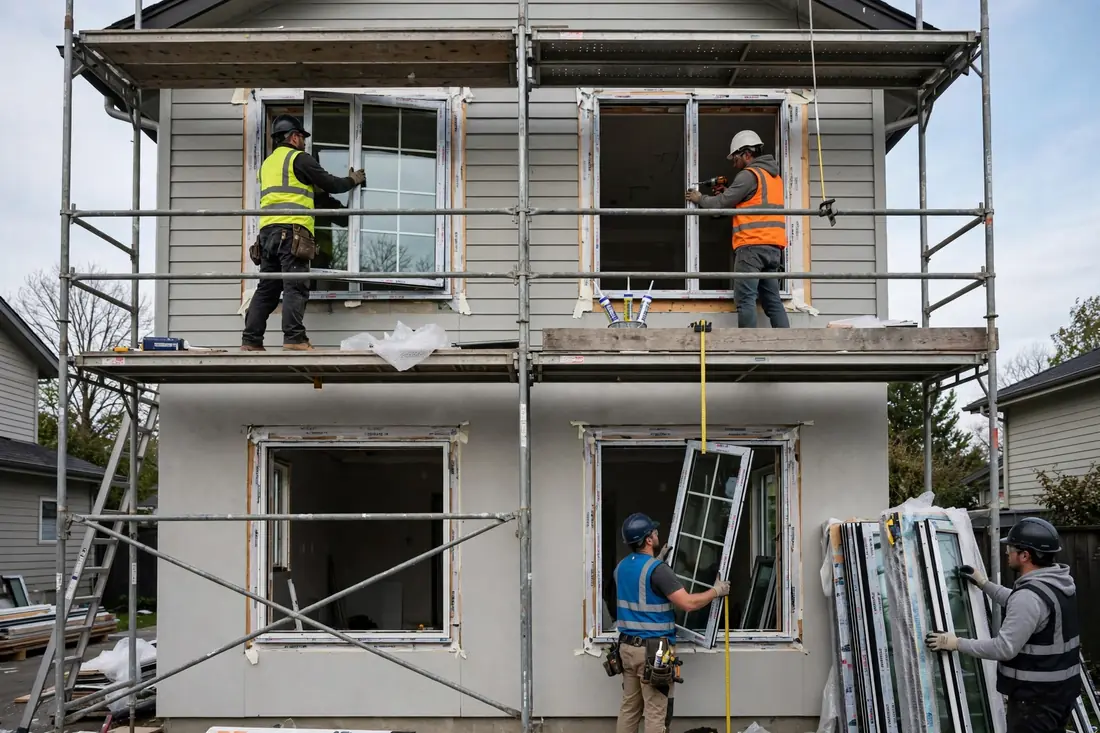
The truck arrives, usually between 8 and 10 a.m. Here is what a typical single-day retrofit job looks like from your side of the front door:
Morning — setup and first windows. The crew lead walks the house with you, confirming which windows are being replaced and noting anything fragile nearby. Drop cloths go down, and the team starts at one end of the house. The first window takes longest — the crew is calibrating to your home’s quirks. By the third window they are in rhythm: old unit out, opening prepped, new unit set, foamed, caulked, trimmed.
Midday — the rhythm. Expect steady noise: prying, occasional drilling, the compressor cycling. It is not deafening, but it is not a work-from-home-friendly soundtrack either. Crews typically work straight through with short breaks. Each opening is exposed for only 15–30 minutes at a time — your house is never sitting wide open.
Afternoon — finish and walkthrough. The last windows go in, exterior capping is finished, and cleanup begins. Then the crew lead walks every window with you: open it, close it, lock it. This is your moment — test everything, look at the caulk lines, check the trim. Anything imperfect gets fixed on the spot, which is infinitely easier than scheduling a callback.
Total disruption for a standard 10–15 window retrofit: one full day, roughly 8 a.m. to 4 p.m.
How long per window and per project
| Job type | Per window | Typical project time |
|---|---|---|
| Standard retrofit (ground floor) | 30–60 minutes | 10–15 windows: 1 day |
| Retrofit (second story) | 45–90 minutes | 10–15 windows: 1–2 days |
| Full-frame replacement | 2–3 hours | 10–12 windows: 2–3 days |
| Bay or bow window | 2–6 hours | Often a dedicated day |
| 1–4 windows (any method) | — | Half day |
| 20+ windows | — | 2–3 days |
These assume a professional two-person crew and no surprises. The method matters more than the count: twelve full-frame windows take longer than twenty retrofits. If you are still deciding between methods, our full-frame vs. retrofit comparison covers the cost and disruption tradeoffs.
What slows projects down
Hidden rot and structural damage. The number-one schedule killer. A rotted sill discovered mid-installation can add hours per opening while the crew sister-framing, replaces sheathing, or waits on materials. There is no way to fully predict it — which is why experienced estimators probe sills during the quote visit.
Weather. Crews work in light rain, but high winds, lightning, and extreme cold stop exterior work. Winter installs take longer overall: openings must be covered between removal and setting, and caulk needs minimum temperatures to cure. It is doable year-round, but winter adds friction.
Custom and oversized units. Anything non-standard — arches, angles, true divided lites, oversized picture windows — installs slower and often needs three or four hands instead of two. Budget double the per-window time.
Access problems. Windows behind overgrown landscaping, above a sunroom roof, or in rooms packed floor-to-ceiling with furniture all slow the crew. The fix is free: clear access before they arrive.
Change orders. “While you’re here, can you also…” Every addition restarts a mini-cycle of pricing, and sometimes ordering. Decide the full scope before install day.
How to prepare your home (the checklist)
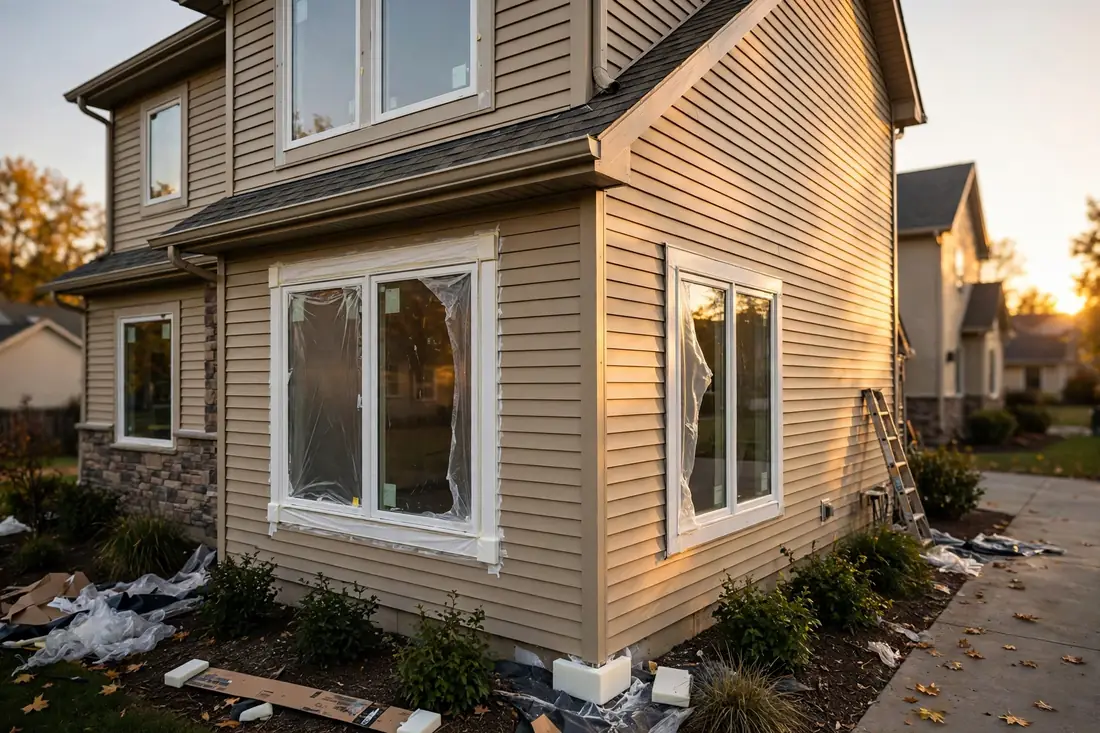
- Clear 3–4 feet around every window inside — move furniture, take down curtains and blinds.
- Clear exterior access — trim bushes back from the house, move patio furniture and grills.
- Protect valuables — take pictures off walls near work areas; vibration is real.
- Plan for pets and kids — doors will be open, strangers will be everywhere, and it will be loud. Daycare or a friend’s house is worth it.
- Designate a bathroom — crews appreciate it, and it avoids awkwardness.
- Keep a parking spot open — the work truck and trailer need to be close.
- Know your alarm — if you have window sensors, tell the crew and your alarm company; sensors get removed and reinstalled.
None of this is the contractor’s job. Every minute the crew spends moving your bookshelf is a minute you are paying skilled labor rates for unskilled work — and our labor cost breakdown shows exactly what those rates are.
After the crew leaves
Install day is not quite the end. Hold the final payment — typically the last 10–20% — until you have done the walkthrough and every window operates correctly. Test each one again the next morning; sashes sometimes settle overnight and need a small adjustment, which the installer should handle on a quick callback.
Register your product warranties with the manufacturer within the first few weeks; some require registration to activate the full term. Keep your contract, the product labels (often left on a sticker inside a closet), and the installer’s warranty terms in one folder. Then watch the first heavy rain: walk the interior side of every new window and look for any sign of water. Catching a flashing issue in month one is a free fix; catching it in year three is an argument.
Key takeaways
- Total project: 4–15 weeks, dominated by 2–8 weeks of manufacturing lead time.
- Installation itself: 30–60 minutes per standard window; 10–15 windows fit in one day.
- Full-frame jobs and 20+ window projects run two to three days on site.
- Hidden rot is the biggest schedule risk — good estimators check for it upfront.
- Prepare the house before the crew arrives; it is the cheapest way to keep the day on track.
Frequently asked questions
Can windows be installed in winter?
Yes. Crews do it routinely — openings are exposed one at a time for short periods, and rooms do not freeze. Expect the job to take a bit longer and confirm the crew uses cold-weather-rated caulk and foam.
Do I need to be home during installation?
For the start and the final walkthrough, yes. Midday, many homeowners leave — just make sure the crew can reach you by phone for decisions. Someone must be available if hidden damage is found.
How far in advance should I book?
For spring/summer installation, start getting quotes in late winter — 8–12 weeks ahead of when you want the work done. Fall and winter bookings are typically faster.
Will my house be a mess?
Less than you fear. Professional crews use drop cloths and clean as they go; each room is typically workable again within an hour of the crew leaving it. The dust is real but contained — it is not a renovation-level mess.
Your next step
Work backward from when you want the windows in. Subtract the 2–8 week manufacturing window, subtract 2–3 weeks for quotes and decisions, and that is when you should start calling contractors. Ask each one about current factory lead times — and while you are vetting them, run through our 12 questions to ask before you sign so the crew you book is one you will not have to micromanage on install day.