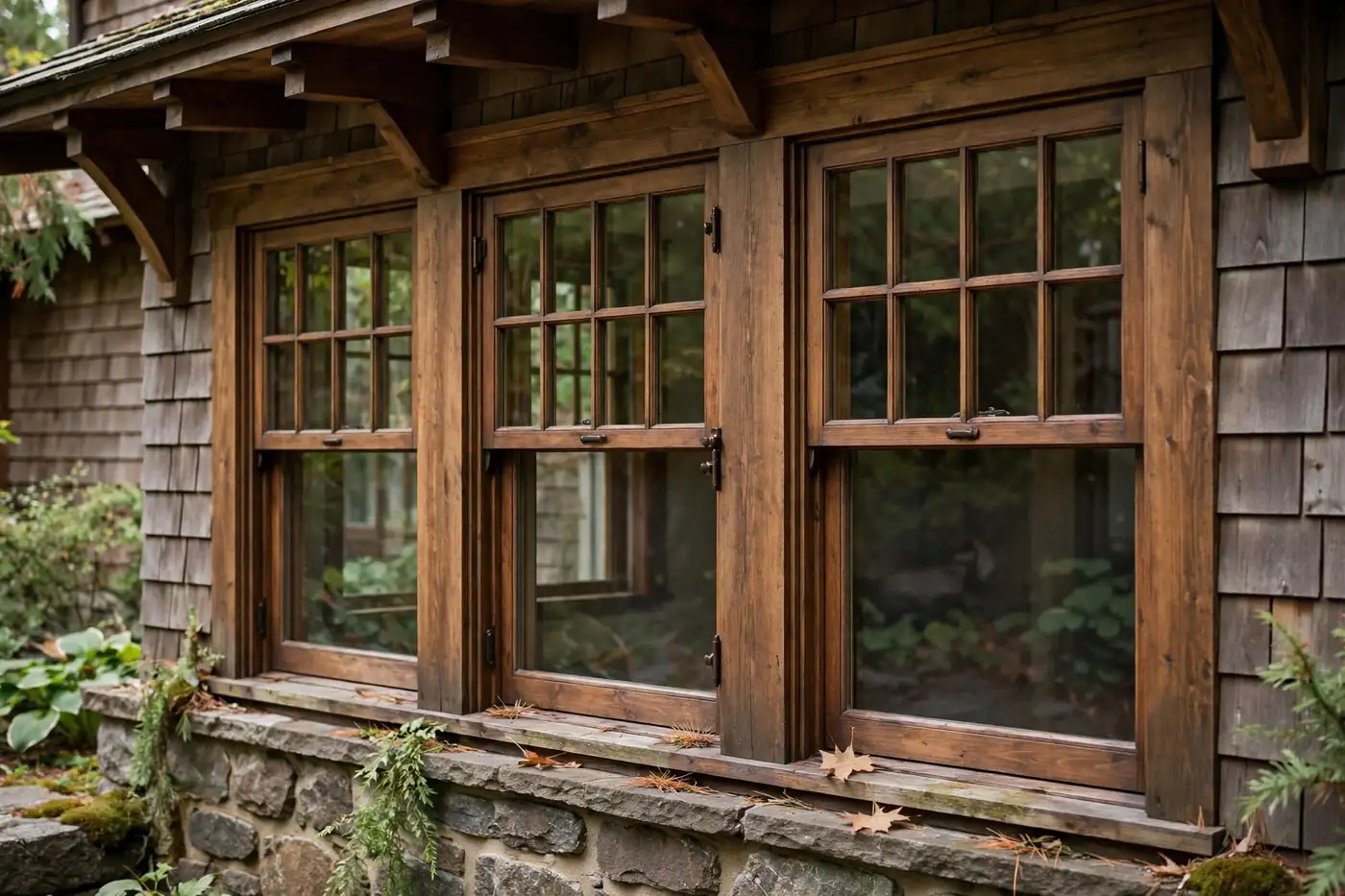
Wood windows are the most beautiful — and the most demanding — choice you can put in a wall. Based on national cost guides as of 2026, expect $700–$3,800 installed per window depending on species, style, and whether you choose solid wood or wood-clad. But the purchase price is only the opening bid: wood asks for maintenance every few years for as long as you own it, and that upkeep is part of the true cost. This guide prices both.
Key takeaways
- Typical installed cost: $700–$3,800 per window; national surveys put the average near $1,300.
- Species matters enormously: pine runs $650–$900 installed per window, while teak can reach $1,400–$1,900.
- Wood-clad (wood interior, aluminum or vinyl exterior) costs more upfront but slashes exterior maintenance.
- Budget for repainting or restaining every 5–7 years — roughly $200–$500 per window per cycle if you hire it out.
- Over 30 years, well-kept wood can rival vinyl on total cost — but only if you actually do the maintenance. Be honest with yourself about that.
What wood windows cost in 2026
“Wood window” covers a wide span, from a stock pine double-hung to a custom mahogany casement. The species, the construction (solid wood vs. clad), and the style move the price more than the word “wood” alone suggests.
| Wood option | Typical installed cost per window | Notes |
|---|---|---|
| Pine (paint-grade) | $650–$900 | Most affordable; softest, needs diligent sealing |
| Douglas fir | $700–$1,100 | Stronger than pine; popular for stain-grade interiors |
| Mahogany / cherry | $800–$1,100 | Rich grain; premium look without the top premium price |
| Teak | $1,400–$1,900 | Extremely durable; priced for luxury projects |
| Wood-clad (any species interior) | $1,100–$2,400 | Wood inside, low-maintenance exterior; the pragmatic premium pick |
| Custom / historic reproduction | $2,000–$3,800+ | Custom milling, true divided lites, preservation-grade work |
Those bands come from national cost guides and contractor pricing data as of 2026 — treat them as planning ranges, and get local quotes for anything firm. A few patterns are worth noting. First, pine dominates the affordable end because it is cheap to mill and takes paint well; its weakness is softness, so it needs prompt, thorough sealing. Second, the jump to wood-clad is worth understanding: you pay more for the window but the exterior is aluminum or vinyl, which means the outside never needs painting. For most buyers, clad is where wood stops being a lifestyle commitment and starts being a practical premium choice.
Whole-house math: a 10-window wood project typically lands between $9,000 and $24,000 installed, versus $4,500–$13,000 for comparable vinyl. That gap is real, and it is the reason most homeowners choose vinyl. Wood buyers are paying for something vinyl cannot give them — which brings us to the maintenance question.
The maintenance bill nobody quotes you
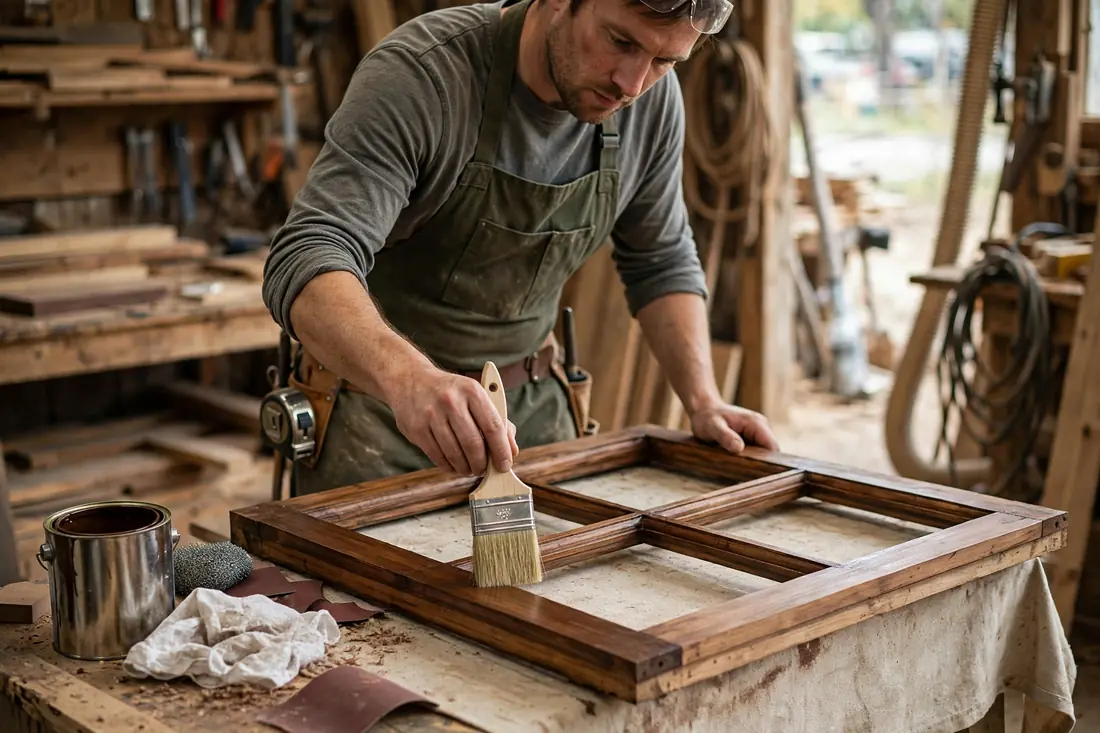
Here is the conversation that rarely happens in the showroom: wood windows need refinishing roughly every 5–7 years — sooner on south and west exposures, later in mild shade. Each cycle means inspecting, scraping or sanding failing finish, spot-priming bare wood, and applying topcoats. Hired out, that runs roughly $200–$500 per window per cycle depending on condition and region. Do it yourself and the cost is weekends plus materials, which is its own kind of price.
Annualized, professional maintenance adds something like $40–$80 per window per year to the cost of ownership. Skip it and the math gets worse, not better: neglected wood rots, and rot means sash or full-unit replacement at full installation prices. Wood is forgiving of attention and ruthless about neglect — there is no middle ground where you ignore it and it stays fine.
Wood-clad changes this equation substantially. The exterior cladding eliminates the most punishing maintenance (the weather side), leaving only interior finish upkeep — a far gentler regime. If you love the wood look but flinch at the maintenance schedule, clad is almost always the right compromise. It is also worth saying plainly: if you know you will not maintain them, do not buy solid wood windows. Buy fiberglass with a wood-look finish or high-end vinyl, and spend the savings on something you will enjoy. Our fiberglass vs. vinyl comparison covers the low-maintenance alternatives honestly.
Total cost of ownership: an honest 30-year sketch
Purchase price alone misleads. Here is a simplified 30-year sketch for one typical double-hung window, using mid-range 2026 figures. Assumptions are stated so you can adjust them: professional maintenance for wood, one mid-life hardware/weatherstripping refresh for vinyl and fiberglass, no catastrophic failures.
| Cost over 30 years (one window) | Mid-grade vinyl | Fiberglass | Solid wood | Wood-clad |
|---|---|---|---|---|
| Installed purchase | $700–$1,200 | $850–$1,850 | $800–$1,500 | $1,100–$2,400 |
| Maintenance (30 yrs, hired) | Minimal (~$100) | Minimal (~$100) | $1,200–$2,400 | $300–$600 |
| Likely replacement within 30 yrs | Possibly once | Unlikely | Unlikely if maintained | Unlikely |
| 30-year total (approx.) | $800–$2,400 | $950–$1,950 | $2,000–$3,900 | $1,400–$3,000 |
Two honest conclusions fall out of that sketch. First, solid wood is the most expensive way to own a window over 30 years unless you do the maintenance yourself — and even then it costs weekends. Second, wood-clad narrows the gap dramatically: you keep the interior beauty while the exterior behaves like a modern low-maintenance window. The premium over vinyl remains, but it buys aesthetics and longevity rather than chores.
Energy performance deserves a note here too. Wood insulates naturally well — better than aluminum, comparable to vinyl — but the glass package matters more than the frame for your utility bills. A wood window with basic glass will underperform a vinyl window with good low-E and argon. If efficiency is a priority, our guide on whether energy-efficient windows are worth the extra cost runs the payback math without the hype.
When wood is genuinely worth it
Wood earns its price in specific situations — and recognizing them is the difference between a satisfying purchase and an expensive regret.
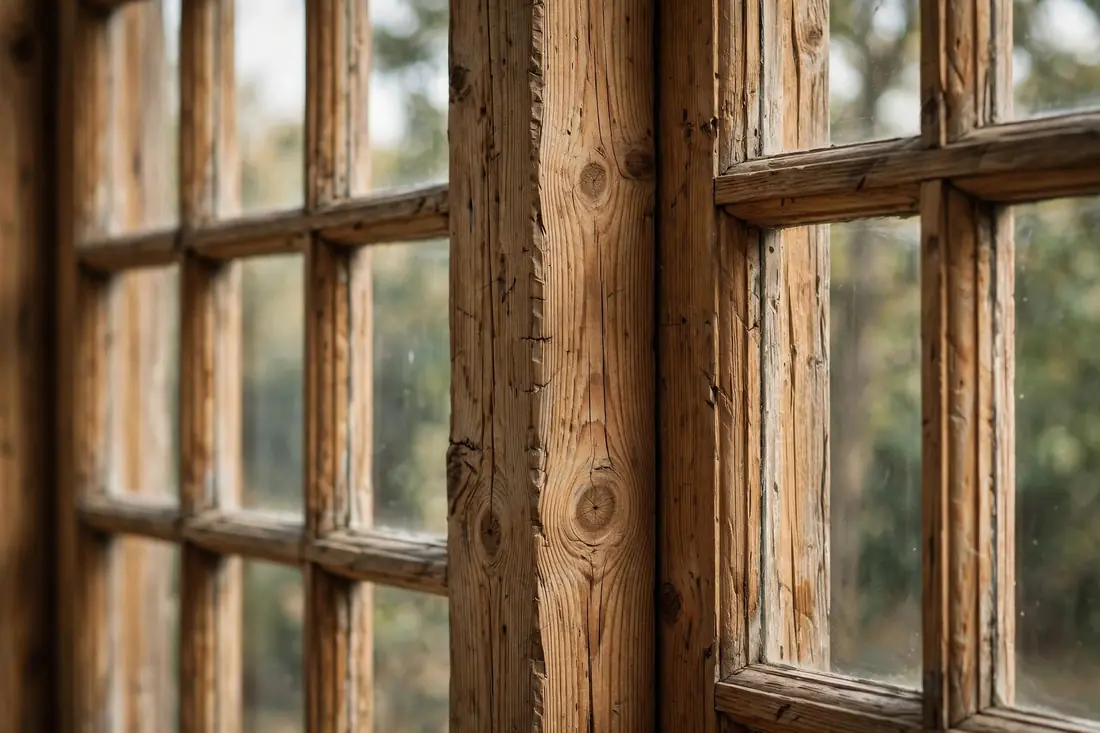
- Historic or architecturally significant homes. On a colonial, Victorian, or craftsman, original-style wood windows protect both character and value. Preservation districts may even require them. This is wood’s strongest case.
- High-end traditional interiors. Stained wood trim and window interiors create a warmth that no synthetic fully replicates. In luxury renovations, the window is part of the interior design, not just a building component.
- You maintain things. Some homeowners genuinely enjoy caring for a house — the painting, the staining, the ritual of it. If that is you, wood rewards the attention with decades of beauty.
- Long ownership horizon. Wood’s longevity advantage only materializes if you keep up maintenance and stay put. A 30-year window makes sense on a 30-year timeline.
When to walk away
Equally important is knowing when wood is the wrong answer, no matter how good it looks in the showroom:
- Rental properties or flips. Tenants will not maintain wood, and the next buyer will not pay you back for it. Vinyl or fiberglass is the rational choice.
- Tight budgets. If the wood premium forces you to buy fewer windows or skip the glass upgrade, you are misallocating money. Cover the whole house in good vinyl before putting wood in two rooms.
- Low-maintenance lifestyle. If weekends are for anything other than home upkeep, solid wood will become a source of guilt and then rot. Choose accordingly — there is no shame in it.
- Harsh, wet climates without overhangs. Wood can work anywhere with proper detailing, but constant wetting without drying shortens finish life and raises maintenance frequency. Clad or fiberglass is safer here.
Frequently asked questions
Are wood windows more energy efficient than vinyl?
The frame itself insulates well, but total window efficiency is dominated by the glass package — low-E coatings, gas fills, and spacer quality. A wood window with mediocre glass loses to a vinyl window with excellent glass. Compare the whole unit’s ratings, not just the frame material.
How often do wood windows need repainting?
Typically every 5–7 years for exterior solid wood, with south- and west-facing windows needing attention sooner. Wood-clad windows eliminate exterior painting; interiors need refinishing far less often, roughly every 10–15 years depending on wear.
Do wood windows rot?
They can, if water reaches unprotected wood — usually at joints, sills, or where finish has failed. Modern wood windows use treated components and better joinery than old ones, but the rule is unchanged: keep the finish intact and water managed, and rot stays away.
Is wood-clad worth the extra cost over solid wood?
For most buyers, yes. You pay more upfront but eliminate the harshest maintenance cycle while keeping the wood interior. The 30-year math usually favors clad unless you are doing the exterior maintenance yourself and enjoy it.
Can I replace just a rotted sash instead of the whole window?
Sometimes. If the frame is sound and only a sash has rotted, sash-replacement kits or a carpenter-built sash can cost a fraction of a full window — often $200–$500 per sash versus $800+ for the whole unit. But if rot has reached the sill or jamb, piecemeal repair is throwing money at a failing frame; a full replacement is the honest fix. Have a contractor probe the frame with an awl before deciding — soft wood tells the truth.
Do wood windows qualify for energy tax credits?
The federal Energy Efficient Home Improvement Credit (Section 25C) has applied to qualifying ENERGY STAR Most Efficient windows regardless of frame material, subject to annual caps — but credit rules have changed repeatedly in recent years, including the expiration of some provisions after 2025. Do not rely on articles (including this one) for current tax law: confirm eligibility with your installer and a tax advisor before counting on it, and check your state’s utility rebates, which vary widely.
Your next step
Decide the maintenance question before the material question: solid wood, wood-clad, or a low-maintenance alternative. Then price your project using our per-window cost breakdown so you can see how species, glass, and installation method stack up — and get three local quotes specifying the exact species and construction, since “wood windows” on a bid can mean very different things.
1 thought on “Wood Window Costs: Price, Maintenance, and Long-Term Value”