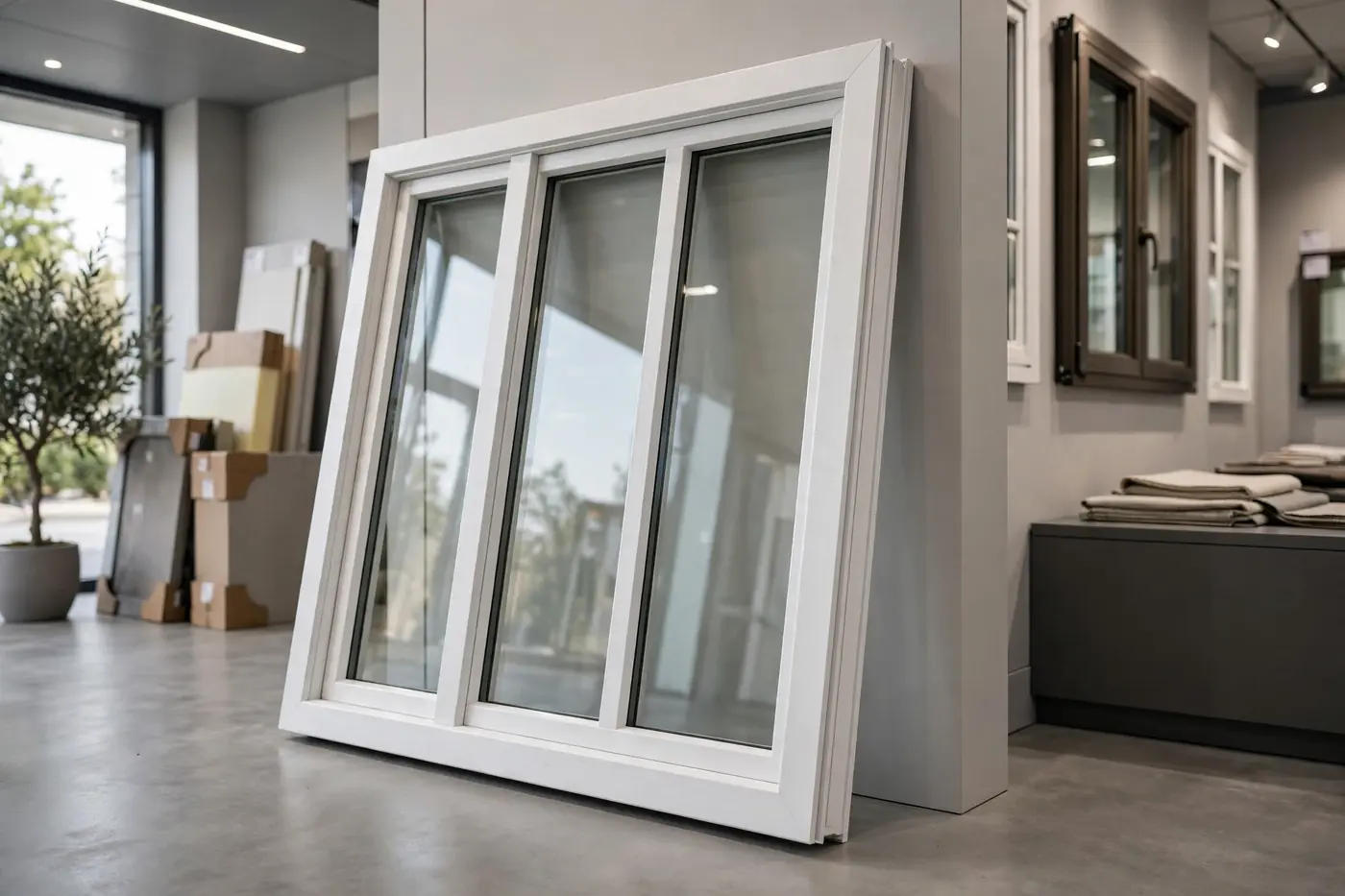
This is the most common material showdown in window shopping, and the honest answer is that both materials win — at different things. Based on national cost guides as of 2026, fiberglass windows typically cost 35–40% more than comparable vinyl: roughly $600–$1,500+ installed per window for fiberglass versus $300–$1,200 for vinyl. Fiberglass is stronger, more stable, and longer-lived; vinyl is cheaper, lower-maintenance in practice, and the better value for most homes. Which one deserves your money depends on your budget, your climate, and how long you plan to stay.
Key takeaways
- The price gap: fiberglass runs about 35–40% more than comparable vinyl — roughly $600–$1,500+ vs. $300–$1,200 installed per window.
- Durability: fiberglass wins clearly — stronger frame, minimal expansion, 30–50 year lifespan vs. vinyl’s 20–30.
- Energy efficiency: closer than marketing suggests — the glass package matters more than the frame; compare U-factors, not materials.
- Looks: fiberglass wins — slimmer profiles, paintable, more finish options. Vinyl’s palette is narrower and cannot be repainted.
- Value: vinyl wins for most homeowners; fiberglass wins for forever homes and extreme climates.
The price gap, plainly stated
Let us put real numbers on it before anything else, because the gap is the whole decision for many buyers. Based on 2026 national cost guides, installed prices per window look like this:
| Vinyl (installed) | Fiberglass (installed) | |
|---|---|---|
| Budget / economy tier | $300–$700 | $600–$900* |
| Mid-range tier | $700–$1,200 | $900–$1,500 |
| Premium tier | $1,200–$1,800+ | $1,500–$2,400+ |
| 10-window whole house | $4,500–$13,000 | $8,500–$18,500 |
*There is barely an economy tier in fiberglass — little market exists for cheap fiberglass, so the material starts where vinyl’s mid-range begins. That missing low end is itself part of the price story.
On a 10-window project, the fiberglass premium typically adds $4,000–$8,000 over comparable vinyl. That is the number to weigh against everything below. It is also worth noting that installation itself can cost a bit more for fiberglass: the material is rigid and heavy, less forgiving of rough openings, and most manufacturers expect professional installation to honor the warranty — fewer DIY-friendly options, more skilled-labor hours.
Head-to-head comparison
| Category | Vinyl | Fiberglass | Winner |
|---|---|---|---|
| Upfront cost | $300–$1,200 installed | $600–$1,500+ installed (~35–40% more) | Vinyl |
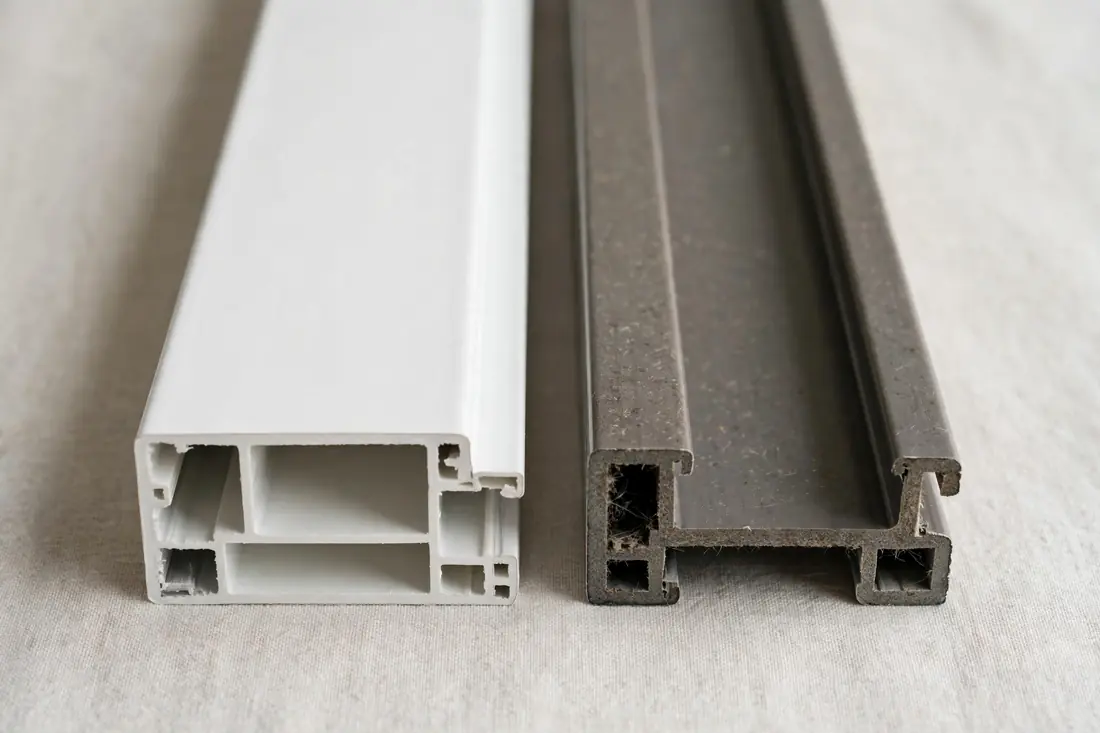
| Strength & stability | Good; can flex and warp in extreme heat | Excellent; up to 9x stronger, minimal thermal expansion | Fiberglass |
| Energy efficiency | Very good with quality glass | Excellent; tighter seals, but glass dominates | Fiberglass, narrowly |
| Lifespan | 20–30 years (quality-dependent) | 30–50 years | Fiberglass |
| Maintenance | Wash occasionally; never paint | Wash occasionally; repaintable if desired | Tie |
| Looks & finishes | Limited colors; cannot repaint; thicker profiles | Slim profiles; paintable; wood-look options | Fiberglass |
| Installation | Forgiving; widely available installers | Demands precision; pro installation expected | Vinyl (easier/cheaper) |
| Eco footprint | PVC production concerns; recyclable in theory | Up to 60% recycled glass content; longer life | Fiberglass |
Round by round: where each material actually wins
Cost — vinyl, decisively
This is not close. Vinyl’s manufacturing is mature and brutally competitive, which compresses margins and gives you negotiating power. Fiberglass costs more to make and sells in lower volumes, so you pay the premium at every tier. If the budget is fixed — and for most households it is — vinyl buys more window per dollar, full stop. Our vinyl window cost guide breaks down the tiers so you can see exactly what each price band buys.
Durability — fiberglass, decisively
Fiberglass barely expands and contracts with temperature — its expansion rate is close to glass itself, which means seals stay intact through decades of thermal cycling. Vinyl moves more, and in extreme heat it can warp or distort, particularly in dark colors. In mild climates this difference is academic; in desert heat or brutal freeze-thaw country, it is the core of fiberglass’s case.
Energy efficiency — fiberglass by a nose, but read the fine print
Here is the industry’s least-advertised truth: the glass package influences efficiency far more than the frame material. A premium vinyl window with triple-pane low-E glass will outperform a fiberglass window with basic double-pane. When comparing bids, ask each contractor for the whole unit’s U-factor and SHGC separately from the frame material — that is the only honest efficiency comparison. Fiberglass’s tighter seals and stability give it a genuine but modest edge with equal glass.
Looks — fiberglass, clearly
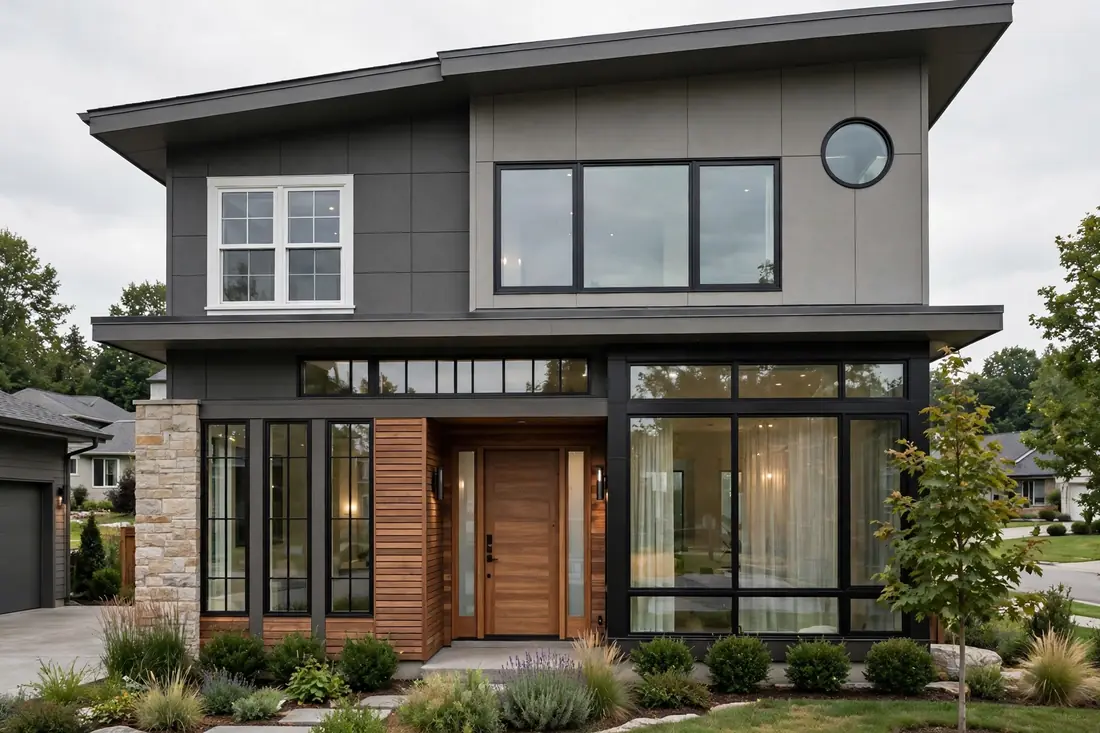
Fiberglass frames can be slimmer (more glass, less frame), take paint in any color, and convincingly mimic wood grain. Vinyl comes in a narrower color range, cannot be repainted without voiding warranties, and needs thicker profiles for equivalent strength. On a home where windows are a design feature — modern minimalist, historic-look, bold colors — fiberglass just looks better.
Maintenance — effectively a tie
Both are wash-and-forget materials compared with wood. Vinyl never needs painting; fiberglass never needs painting either but can be repainted if you want a new color down the road. Call it even, with a small lifestyle edge to fiberglass for the repaint option.
Verdict by budget and situation
Forget “which is better” — here is which is better for you.
The tight-budget homeowner: vinyl, no contest
If the choice is between mid-grade vinyl now and fiberglass “someday,” buy the vinyl now. A $9,000 vinyl project that happens beats a $15,000 fiberglass project that does not. Put the savings toward the glass upgrade and a good installer — those two decisions affect your daily comfort more than the frame material ever will.
The forever-home owner: fiberglass earns its premium
Staying 20+ years changes the math. Fiberglass’s 30–50 year lifespan means you may never replace these windows again, while mid-grade vinyl might need a second round in year 25–30. Spread over decades, the $4,000–$8,000 premium amortizes into a modest annual cost for a stronger, better-looking, more stable window. This is fiberglass’s best case, and it is a good one.
The extreme-climate homeowner: fiberglass for performance, vinyl with caution
Desert Southwest heat, northern plains freeze-thaw, coastal hurricane zones — places where windows take punishment reward fiberglass’s stability. In mild climates (much of the Southeast, Mid-Atlantic, Pacific Northwest), quality vinyl performs beautifully for decades, and the fiberglass premium buys mostly aesthetics and longevity rather than survival.
The question that matters more than frame material
Before you finalize the material debate, settle the two decisions that affect outcomes more: the glass package and the installer. Low-E with argon is the value baseline; triple-pane is for severe cold or noise. And a superb window installed poorly will underperform a decent window installed perfectly — air-sealing, flashing, and square setting are craft work. Vet the crew as hard as you vet the product. If you are still weighing styles too, our double-hung vs. casement comparison covers how operating style interacts with material choice.
And if wood’s aesthetics are tugging at you despite the maintenance reality, our wood window cost guide prices the beauty honestly — including the 30-year upkeep math most sellers skip.
A brief word on composite (the third option)
You will sometimes see composite windows — materials like fibrex-style wood-plastic blends — positioned between vinyl and fiberglass. They typically price between the two (roughly $400–$2,300 installed per window based on national guides) and aim to combine wood-like looks with low maintenance. Composite is a legitimate option, especially from established manufacturers, but the category is smaller and product lines vary more than the big two — compare specific products rather than the material name. Our aluminum and composite window cost guide goes deeper if you are considering them.
Frequently asked questions
Is fiberglass really worth 40% more than vinyl?
It depends on your time horizon. Over 10–15 years, usually not — vinyl’s value is hard to beat. Over 25–30+ years in a home you will keep, fiberglass’s longevity, stability, and appearance can justify the premium. Match the material to your ownership timeline.
Do fiberglass windows save more on energy bills?
Slightly, with equal glass — but the difference is modest, and the glass package dominates the result. Do not expect the fiberglass premium to pay for itself through utility savings; buy it for durability, stability, and looks instead.
Can you paint vinyl windows instead of buying fiberglass?
Specialized paints exist, but painting vinyl typically voids the warranty and risks heat-related warping in darker colors. If custom color matters to you, fiberglass (or wood-clad) is the honest answer.
Which is better for resale value?
Both return roughly similar percentages at resale — remodeling data shows window replacement recoups around two-thirds of cost regardless of material. Fiberglass may photograph and show better on upscale homes, but no buyer pays dollar-for-dollar for the material premium. Buy for your own tenure, not the next owner’s.
How do I know if a contractor is pushing one material for commission reasons?
You cannot know their margins, but you can test their advice: ask what they would recommend if the budget were no object, and then ask what changes if the budget is tight. A contractor whose recommendation flips entirely with your budget is selling, not advising. Also be wary of anyone who dismisses an entire material categorically — “vinyl is junk” or “fiberglass is a scam” — since both materials have legitimate places, as this guide shows.
And a final practical note on timing: window pricing is seasonal in many markets. Late fall and winter are often slower for installers, and some homeowners report better quotes when crews are hungry for work — though selection and scheduling flexibility matter too. There is no universally “cheapest month,” but getting your three quotes during a contractor’s slow season and being flexible on install dates is a legitimate, no-downside negotiating lever.
Your next step
Pick your scenario from the verdicts above, lock in the glass package (low-E + argon minimum), and get three itemized quotes specifying exact product lines and whole-unit U-factors. The material decision gets easy once the glass and installer decisions are made — and the quotes will tell you the rest.
1 thought on “Fiberglass vs. Vinyl Windows: Cost Comparison”