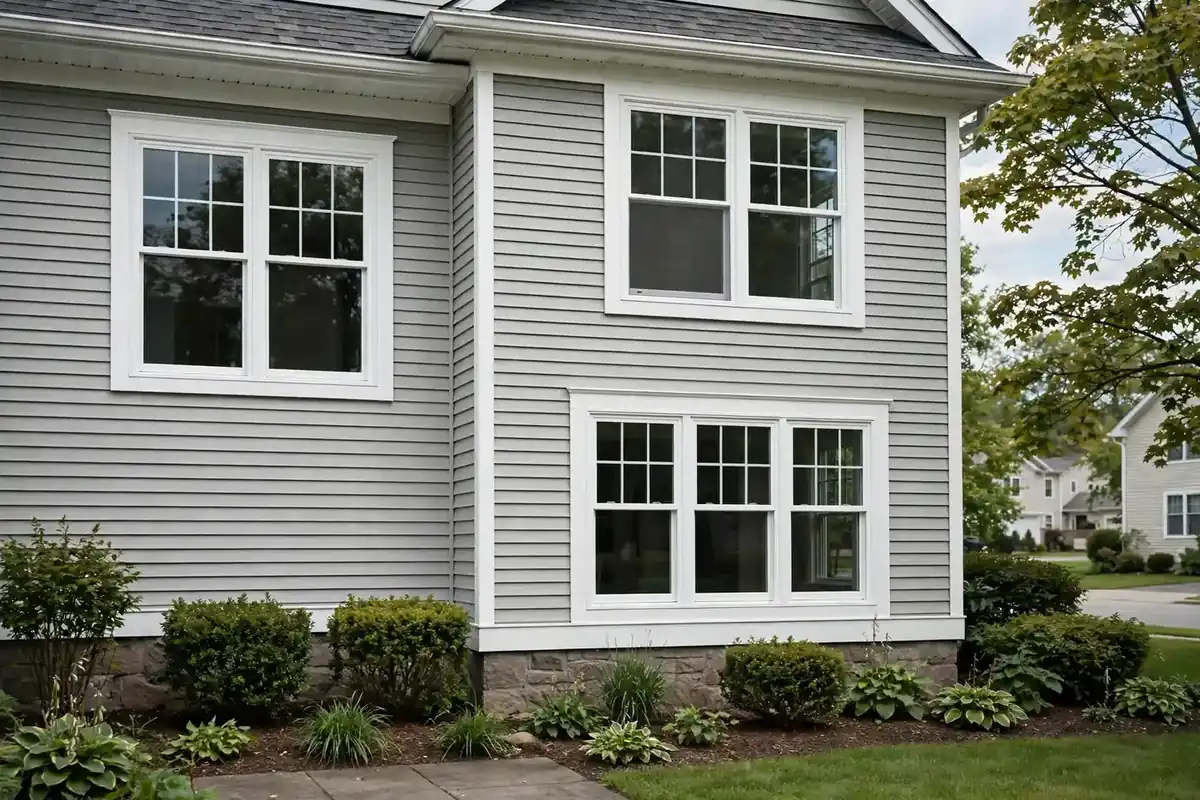
Vinyl is the default window material in America for one reason: it delivers the most window per dollar. Based on national cost guides as of 2026, vinyl replacement windows typically run $350–$1,500 installed per window, with most homeowners paying $500–$900 for a solid mid-range unit. Nothing else combines that price, that insulation, and that lack of maintenance — which is exactly why roughly the majority of US replacement windows sold are vinyl.
Key takeaways
- Typical installed cost: $350–$1,500 per window; a 10-window whole-house project usually runs $4,500–$13,000.
- Three quality tiers exist inside “vinyl”: economy ($450–$700), mid-grade ($700–$1,200), premium ($1,200–$1,800+) — the tier explains most quote differences.
- Labor is $100–$500 per window; the rest is the unit, glass upgrades, and extras like trim and disposal.
- Vinyl’s real advantages are price, insulation, and zero painting — not prestige. It is a value material, and that is its strength.
- Always get three itemized quotes: two “vinyl window” bids can describe very different quality tiers at very different prices.
Why vinyl became the default
Thirty years ago, wood ruled and aluminum was the budget pick. Then vinyl extrusions got better — multi-chamber profiles, welded corners, decent weatherstripping — and the math became undeniable. A vinyl window insulates better than aluminum, costs a fraction of wood, and never needs painting. Contractors loved it because it installs fast and callbacks are rare. Homeowners loved it because the quote was thousands less than wood for a whole house.
Today the market has settled into a clear hierarchy. Vinyl owns the value tier outright. Fiberglass and composite fight over the premium tier. Wood survives on aesthetics and historic homes. Aluminum hangs on in commercial and modern-minimalist residential work. None of that is an accident — it is what happens when one material wins on price, performance, and maintenance simultaneously.
That dominance is useful context when you are shopping, because it means the vinyl market is brutally competitive. Competition is good for you: it keeps margins thin and gives you leverage. But it also means the spread between the cheapest vinyl window and the best one is enormous — they share a material name and not much else.
Vinyl window price bands in 2026
All of the following are installed prices per window, based on national cost guides as of 2026. Remember these are typical ranges for planning, not quotes — your local market and the specific product tier move the number.
| Quality tier | Installed per window | What you actually get | Realistic lifespan |
|---|---|---|---|
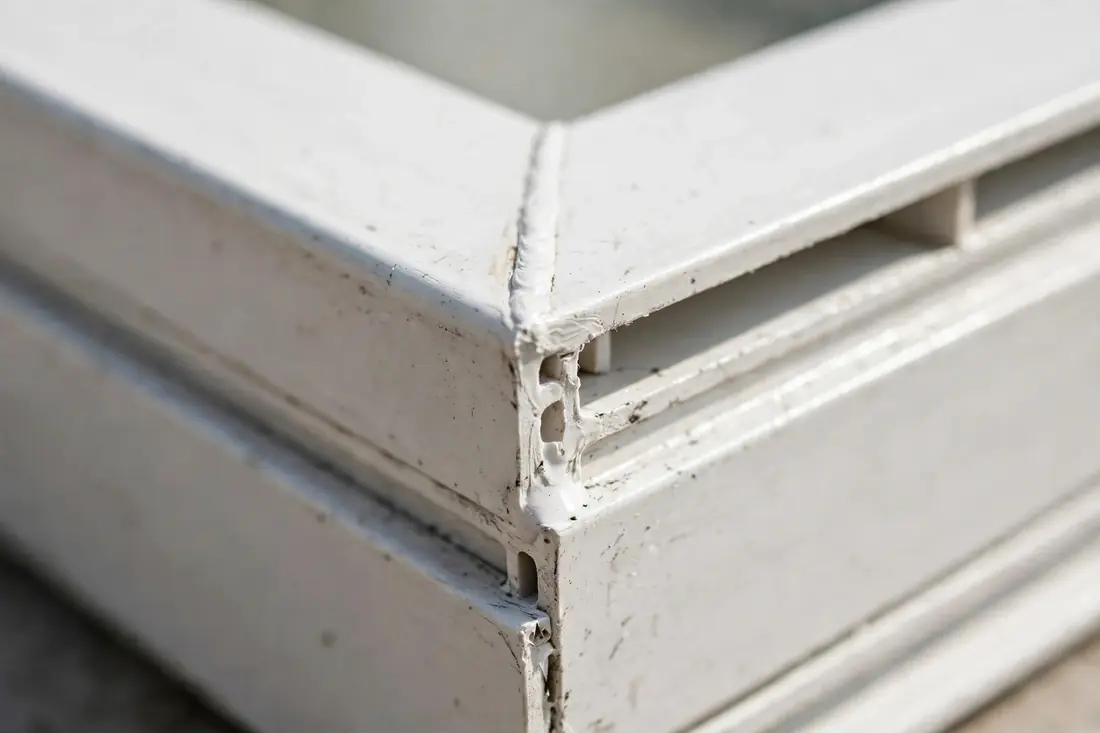
| Economy | $450–$700 | 2–3 chamber extrusion, mechanically joined corners, basic low-E glass | 12–18 years |
| Mid-grade | $700–$1,200 | 4–5 chamber profile, welded corners, argon fill, better low-E | 25–30 years |
| Premium | $1,200–$1,800+ | 6–7 chamber profile, foam-filled frames, premium glass, custom colors | 30+ years |
The tier is the single most useful concept in vinyl shopping. When one quote is $600 a window and another is $1,100 “for vinyl,” the tier is almost always the explanation — not contractor greed. Mid-grade is the right answer for most whole-house replacements: the few hundred dollars per window over economy buys roughly double the service life, better sealing, and noticeably better hardware.
Project-scale math: a 10-window home in mid-grade vinyl typically totals $7,000–$12,000 installed, with national guides showing $4,500–$13,000 as the broader band depending on region and scope. Go economy and you might land under $6,000; go premium or add full-frame installation and $15,000+ is easy to reach. Volume discounts of 10–20% versus single-window pricing are common once you pass about eight windows.
Where your money actually goes
A $900 vinyl window installation is not a $900 window. Understanding the split helps you judge quotes — and it is the same anatomy we break down in our per-window cost guide.
The unit itself (roughly 50–65% of the total)
The window — frame, sashes, glass, hardware, screens — is the biggest chunk. Within the unit, the glass package is the highest-leverage upgrade: moving from basic double-pane to low-E with argon typically adds a modest amount per window while improving comfort for decades. Grids, custom colors, and upgraded hardware add smaller increments that accumulate fast across ten windows.
Labor ($100–$500 per window)
Retrofit installations cluster at the low end; full-frame replacements, second-story work, and rot repair push toward the high end. Labor is also the most regionally variable line — the same job can cost double in a high-cost metro versus a small town. This variance is the entire reason the three-quote rule exists.
The rest (often overlooked)
Old window disposal, interior and exterior trim or casing work, insulation of the weight pockets, caulking, and permits. None is large alone; together they can add $50–$150 per window. A quote that seems too low often simply omits these — ask explicitly what is included.
When vinyl is the wrong choice
Value materials have limits, and an honest guide names them. Consider stepping up — our fiberglass vs. vinyl comparison walks through the trade-offs in full — when:
- You live somewhere brutally hot. Dark-colored vinyl in intense sun can warp or distort over time. Lighter colors and quality extrusions mitigate this, but fiberglass handles extreme heat with more margin.
- You want a specific dark or custom color. Vinyl color options are narrower than paintable materials, and dark vinyl absorbs heat. Fiberglass and wood-clad offer far more finish flexibility.
- The house is historic or high-end traditional. Vinyl reads as vinyl. On a colonial or craftsman where authenticity matters for value, wood or wood-clad protects the home’s character — and its resale.
- You need very large or structural openings. Vinyl is not the stiffest material; oversized units can flex. Fiberglass or aluminum handle big spans better.
None of these disqualify vinyl for the typical suburban home. They are edge cases — but knowing them keeps you from buying the wrong material for an edge-case house.
Getting vinyl right: mistakes to avoid
- Comparing quotes by bottom line instead of tier. A $650 economy window and a $1,050 mid-grade window are different products. Get the chamber count, corner construction, and glass specs in writing.
- Buying the cheapest vinyl to “save money.” Economy vinyl’s 12–18 year life versus mid-grade’s 25–30 means the cheap window can cost more per year of service. Price per year, not price per window.
- Skipping the glass upgrade. Low-E with argon is the best dollars-to-comfort trade in the project. Do not value-engineer it away.
- Assuming all installers are equal. A great window installed badly performs worse than a decent window installed well. Check reviews, ask about crew experience, and confirm who actually shows up — the company you hired or a subcontractor.
- Forgetting about the style. Material is only half the decision. A vinyl double-hung and a vinyl casement at the same tier can differ by a few hundred dollars per window — our double-hung window cost guide details that style’s pricing if it is on your shortlist.
How to read a vinyl window quote like a pro
Most vinyl quotes are one page with a bottom line — and that is exactly why they are hard to compare. Here is what a good quote shows, line by line, and what to ask when it does not.
Product identification. The quote should name the manufacturer, the product line, and the series — not just “vinyl double-hung.” Two lines from the same manufacturer can sit in different tiers with different prices. If the quote says only “vinyl windows,” you cannot compare it to anything; ask for the specifics in writing.
Glass package, spelled out. “Double-pane, low-E, argon fill” is the baseline you want to see named explicitly. Vague phrases like “energy-efficient glass” mean nothing — every window sold today claims that. The quote should also note the spacer type if upgraded (warm-edge spacers are a legitimate step up).
Installation method. Retrofit/insert versus full-frame should be stated, not assumed. Full-frame typically adds 30–50% to the per-window labor, so a quote that is mysteriously higher than the others may simply include more thorough installation — or a quote that is mysteriously lower may be planning the quickest possible insert.
Line items beyond unit + labor. Disposal of old windows, interior casing, exterior trim or capping, insulation, and permit fees should each appear. A common trick is not a trick at all, just omission: the low bid left out the trim work you will then pay for separately.
Warranty terms, both of them. Product warranty (often lifetime limited, with fine print on glass seals and hardware) and labor warranty (this is the one that actually protects you — one year is common, two or more is better) should both be stated. A contractor who will not put the labor warranty in writing is telling you something.
Frequently asked questions
How long do vinyl windows last?
Economy vinyl: roughly 12–18 years. Mid-grade: 25–30 years. Premium: 30+ years. Sun exposure, installation quality, and maintenance (mostly keeping weep holes clear and weatherstripping intact) move the number within those bands.
Are cheap vinyl windows worth it?
For rentals, flips, or a home you will sell within five years, economy vinyl is rational — you are buying acceptable performance at minimum cost. For a home you will keep, mid-grade’s longer life and better sealing almost always win on cost per year.
Can vinyl windows be painted?
Technically yes with specialized paint, but it is generally not recommended — paint voids most warranties and can cause heat-related warping on darker colors. If you want a custom color, buy a paintable material like fiberglass instead.
Do vinyl windows lower home value?
Quality vinyl replacements typically return around two-thirds of their cost at resale, according to national remodeling cost-vs-value data, and they eliminate the “old windows” objection for buyers. Cheap, visibly flimsy vinyl on an upscale home can be a negative — match the tier to the neighborhood.
Your next step
Decide your tier before you call anyone — mid-grade vinyl, professionally installed, is the right default for most homeowners. Then collect three itemized quotes specifying the exact product line, glass package, and installation method. With the tier fixed, the quotes become genuinely comparable, and the best value tends to reveal itself.