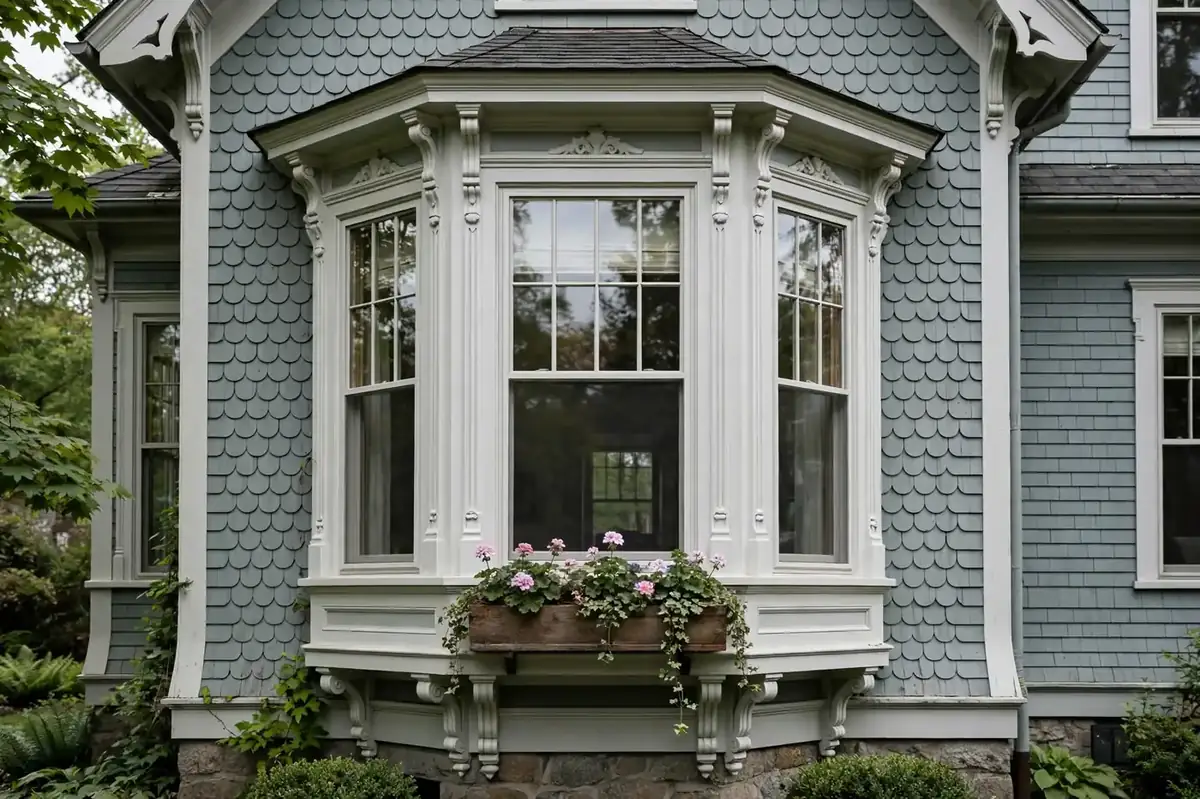
Budgeting for a bay or bow window is a different exercise from pricing a standard replacement. Based on national cost guides as of 2026, expect roughly $2,000–$6,000 installed for a bay window and $3,000–$8,000+ for a bow window, with the final number driven by size, material, and how much structural work your wall needs. These are project prices, not per-pane prices — and treating them that way is the first step to an accurate budget.
Key takeaways
- Bay windows: typically $2,000–$6,000 installed; bow windows: typically $3,000–$8,000+, based on 2026 national cost guides.
- Bow windows cost about 1.5–2.5x more than a comparable bay — more panels, more weight, more structural support.
- The window unit itself is often less than half the total; framing, roofing, and finishing labor make up the rest.
- Quotes for the “same” project commonly vary by $2,000–$4,000 between contractors — always compare at least three itemized bids.
- Never accept a quote that lumps everything into one number; demand line items for unit, structural work, labor, and finishing.
What a bay or bow window costs in 2026
A bay window is typically three panels — a large center picture window flanked by two angled operable windows — projecting outward from the house. A bow window uses four to six narrower panels in a gentler curve. Both create interior space and light, and both require cutting a bigger opening, supporting the projection, and roofing over it. That structural work is why the price lives in a different universe from a standard double-hung.
Here is how 2026 budgets typically break down by project tier. These are all-in installed ranges for a standard residential opening.
| Project tier | Bay window (installed) | Bow window (installed) | What you get |
|---|---|---|---|
| Entry | $2,000–$3,500 | $3,000–$5,000 | Prefabricated vinyl unit, fixed center, basic low-E glass, minimal structural changes |
| Mid-range | $3,500–$5,000 | $5,000–$7,500 | Operable side windows, upgraded glass package, better hardware, some reframing |
| High-end | $5,000–$7,000+ | $7,500–$10,000+ | Wood-clad or fiberglass, custom sizes, premium finishes, significant structural work |
At the entry level, you are usually looking at a prefabricated three-panel vinyl bay with a fixed center window — the installers bring it as one unit and set it into a prepared opening. Mid-range projects add operable flankers (often casements) and better glass. High-end work goes custom: wood interiors, copper roofing over the projection, stained trim to match the house. Each step up adds real money, so decide in advance which tier matches your home and how long you plan to stay.
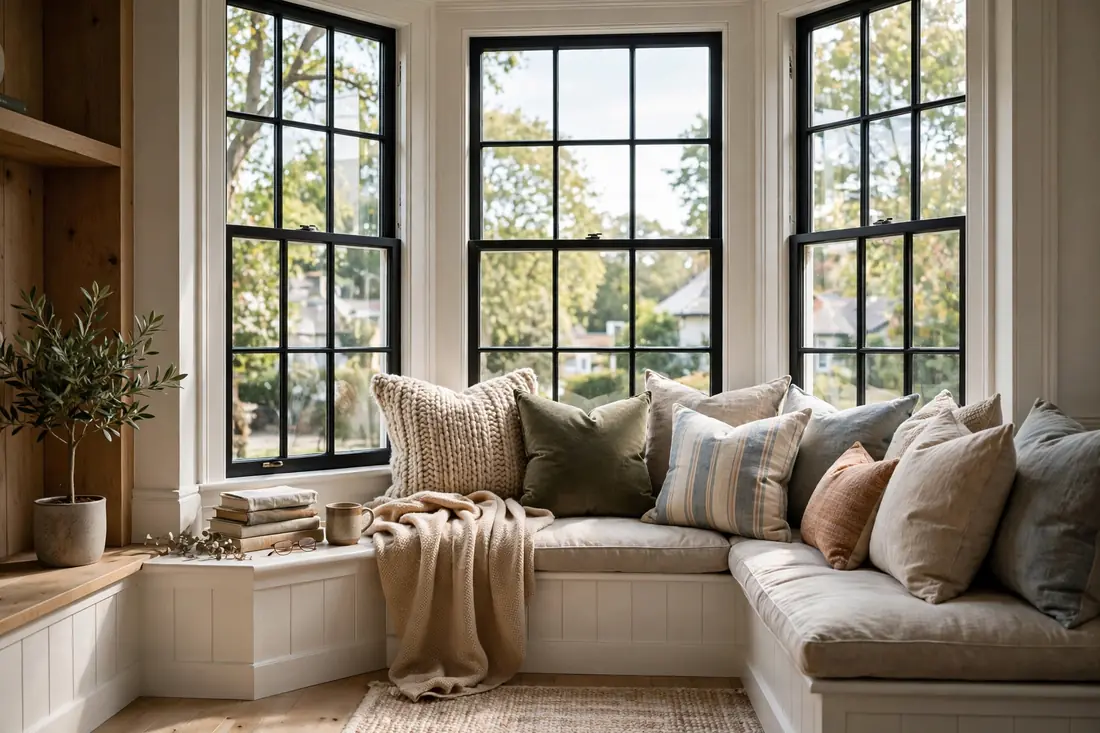
Bay vs. bow: where the money goes differently
Homeowners often ask which costs more and why. The bow almost always costs more — typically 1.5 to 2.5 times a comparable bay — for three concrete reasons.
First, panel count. A bay has three panels; a bow has four to six. More panels mean more glass, more frame, more seals — and more places for future seal failure. Second, weight and support. Bow units are heavier and project differently, so they demand more substantial structural support: beefier headers, knee braces or cable supports, and careful load transfer. Third, the roof. Both need a small roof over the projection, but the bow’s curved footprint makes flashing and roofing more fiddly.
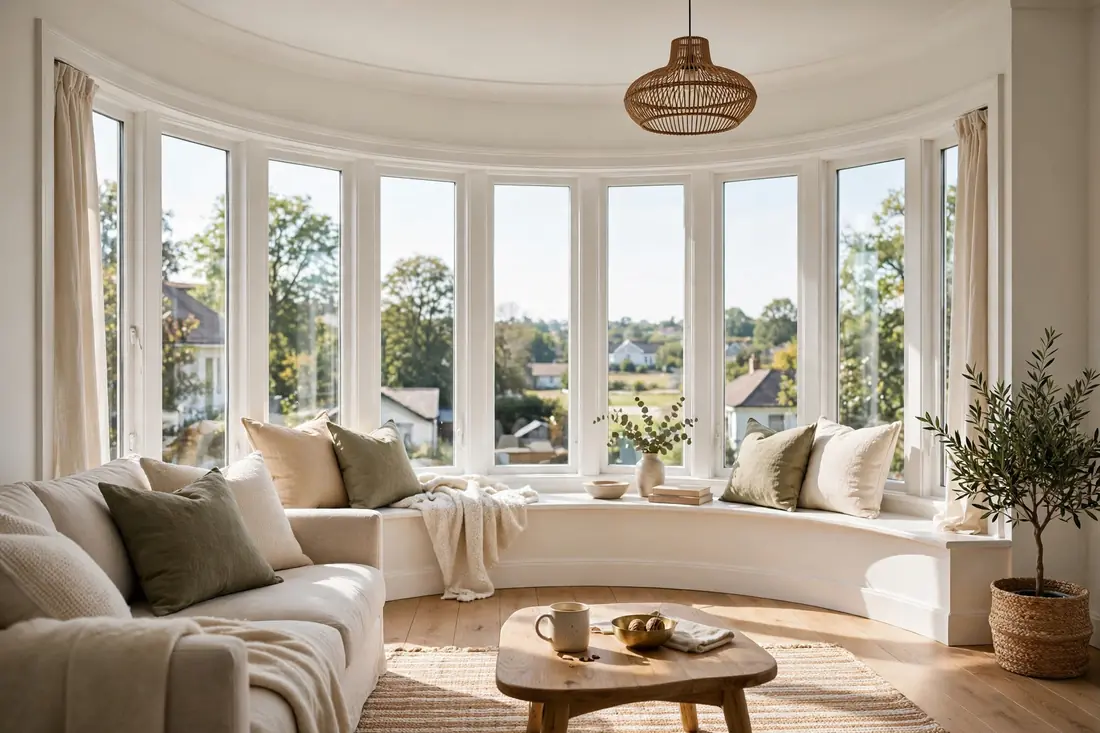
On the other hand, bays offer more customization — you can choose the projection angle (commonly 30 or 45 degrees) and mix operable styles — while bows are more uniform. Bays are also somewhat easier to repair down the road, since three large panels are simpler to service than six narrow ones. If budget is the deciding factor, the bay wins. If you want the softer, panoramic curve and the budget allows, the bow earns its premium in looks.
Build your budget line by line
The biggest budgeting mistake with bay and bow projects is treating the quote as one number. Break it into lines — this is also how you compare contractors honestly, since our per-window pricing guide shows how the same logic applies to standard windows at smaller scale.
1. The window unit ($1,000–$5,000+)
The unit itself — frame, glass, hardware — is often the single largest line, but rarely more than half the total. Vinyl prefab bays start near $1,000–$2,000 for the unit; wood-clad or fiberglass custom bows can exceed $5,000 before anyone lifts a tool.
2. Structural work ($500–$2,500+)
Widening the opening, installing a new header, adding support brackets or cables, and building the seat board. This is the line with the widest variance and the most surprises. Older homes with balloon framing or unexpected rot can push this higher — which is exactly why a good contractor inspects before quoting a firm number.
3. Installation labor ($500–$1,500+)
Setting a bay or bow is typically a multi-person, full-day job — sometimes two days. The crew size alone (often three installers) tells you this is not a standard swap. Labor rates follow your local market, just as with any window installation.
4. Roofing and exterior finishing ($300–$1,200)
The projection needs a weatherproof top — usually a small standing-seam or shingled roof — plus flashing, siding transitions, and exterior trim. Skimp here and you buy water damage later; this line is not the place to hunt for savings.
5. Interior finishing ($200–$800)
Drywall returns, a finished seat board, interior casing, paint or stain. If you want a reading-nook seat with storage underneath, say so before the quote — add-ons priced mid-project always cost more.
6. Permits and disposal ($50–$500)
Many municipalities require a permit for structural openings. Disposal of the old window and construction debris should be a visible line, not buried in labor.
Add those lines and you can see why a “$3,000 bay window” quote and a “$6,000 bay window” quote can both be honest — they are often describing different scopes. The line items tell you which.
Why quotes vary so much — and how to compare them
It is normal for bay and bow quotes to spread $2,000–$4,000 on the same house. The spread usually comes from scope differences, not dishonesty: one contractor includes the small roof and interior trim, another prices “window installation only” and leaves you hiring a carpenter and roofer separately. A third specs a premium unit while the first quoted builder-grade vinyl.
To compare apples to apples, make every bidder answer the same questions in writing: exact unit (brand, series, material, glass package), operable vs. fixed panels, who handles structural framing, who roofs the projection, who finishes the interior, permit responsibility, disposal, and warranty terms for both product and labor. Then compare the line items, not the bottom line. Our guide to window replacement red flags covers the pressure tactics and vague-scope tricks to watch for while you are collecting bids.
Also worth knowing: material choice swings the unit price hard. If your quotes are coming in high, ask what a vinyl unit would cost versus the wood-clad or fiberglass spec — and if you are considering less common frames, our aluminum and composite window cost guide explains where those materials fit.
Paying for it: cash, financing, and phasing
A bay or bow project is one of the few window jobs where financing enters the conversation — $5,000+ is real money. If you have the cash, paying outright is simplest and gives you negotiating leverage; some contractors discount a few percent for payment on completion without financing paperwork. Home equity lines of credit are the most common sensible route for larger projects, since rates are typically far below credit cards and the interest may be tax-deductible — confirm that with your tax advisor, not the contractor.
Contractor-offered financing deserves a careful read. “Same-as-cash for 12 months” deals are fine if you will genuinely pay within the window, but the retroactive interest clauses on missed deadlines are punishing — that is not a scare tactic, it is arithmetic you should do before signing. And never let financing drive the scope: a project you cannot afford in cash at the entry tier does not become affordable at the high-end tier because someone offered monthly payments.
Phasing is the underused alternative. If the dream is a bow window but the budget says otherwise this year, a quality bay now beats a financed bow later — you get the light and space immediately, and the smaller structural footprint keeps the door open for future work elsewhere.
Mistakes that blow up a bay or bow budget
- Budgeting the unit price as the project price. The window is often under half the total. Budget the project, not the product.
- Skipping the structural inspection. A contractor who quotes firm without opening up or probing the existing framing is guessing. Guesses get revised upward mid-job.
- Forgetting the roof. Every projection needs weatherproofing on top. If no quote mentions it, the scope is incomplete.
- Choosing maximum size for a minimum budget. Bigger projection = more structure = more money, nonlinearly. A modest bay done well beats an ambitious one done cheaply.
- Letting interior finishing become an afterthought. An unfinished seat board and raw drywall edges will bother you daily. Price the finish work upfront.
- Signing before comparing three itemized quotes. On a $5,000 project, the spread between bids is often the largest single “discount” available to you — and it costs nothing to collect.
Frequently asked questions
Is a bay window worth the cost?
It depends on what you value. Bays add interior space, natural light, and curb appeal that standard windows cannot match, and they are a genuine selling feature. They do not “pay for themselves” in energy savings — buy one for the space and the look, with eyes open about the price.
Can you put a bay window where a flat window was?
Yes — that is the most common bay project. It requires widening the rough opening, adding a header and supports, and roofing the projection. A structural assessment first is non-negotiable; the wall has to carry the new load.
Do bow windows open?
Most bow windows use fixed panels; the gentle curve and narrow panel widths make operable hardware impractical in most product lines. If ventilation matters, a bay with operable flankers is usually the better choice.
How long does a bay or bow installation take?
Typically one to two days for the window setting itself, plus additional time for roofing, interior finishing, and paint. A realistic all-in timeline is often a week from demolition to finished trim, assuming no structural surprises.
Your next step
Decide your tier (entry, mid, or high-end), then invite three contractors to inspect the wall in person — not just measure the opening, but assess the structure. Hand each the same written scope checklist so the quotes come back comparable. With line-item bids in hand, the right choice usually becomes obvious, and the wrong ones become easy to spot.